The Longest Journey Home
From the southern tip of Chile toward England — the archive of the Goliath Expedition, begun 1 November 1998 and still in motion.
Lines on a Map
In the mid-1990s, Karl Bushby received a birthday card from his father that would alter the course of his life. Inside was a handwritten note about a conversation between two UK Special Forces members: they had been arguing over an impossible feat — walking from London to New York via the Bering Strait. The land bridge they pictured had not existed for twenty thousand years. Until that moment, Karl's ideas about journeys on foot had been modest, limited in both time and scope.
Driven by something he could not name, Karl grabbed a marker and walked to his wall map. He drew a line from the UK, across Europe and Asia, over the frozen strait — and did not stop at New York. He dragged the marker all the way down to the southern tip of South America. Looking at that unbroken line, he knew he had found his life's mission.
Stationed at Connaught Barracks behind Dover Castle, Karl would walk to the White Cliffs on clear days and look out at the English Channel. Continental Europe was entirely visible on the horizon. If he started at the tip of Chile, the walk would eventually lead him right back to that European coastline. He imagined the weathered figure he might one day become — arriving on the far shore, looking back through the years at the young paratrooper about to make the most consequential decision of his life. A time loop hung in the air. It needed to be closed.
Into the Wild
On 1 November 1998, Karl Bushby stepped out of Punta Arenas, Chile, and onto a road estimated at 36,000 miles. He had roughly five hundred dollars, no corporate sponsors, no defined strategy beyond two rules: no transport to advance, and no going home except on foot.
Patagonia hit immediately. Hurricane-force winds bent him to a forty-five-degree lean for days at a time, and ripped him and his hundred-pound gear cart — christened The Beast — clean off the road. The landscape was magnificent; the weather was punishing.
Recognising that the high-desert plateau east of the Andes could not sustain the expedition, Karl made an early pivot: he crossed the mountain range and pushed toward the coast and more survivable terrain. It was the first recalibration of many.
Hunger, Highways, Hostile Ground
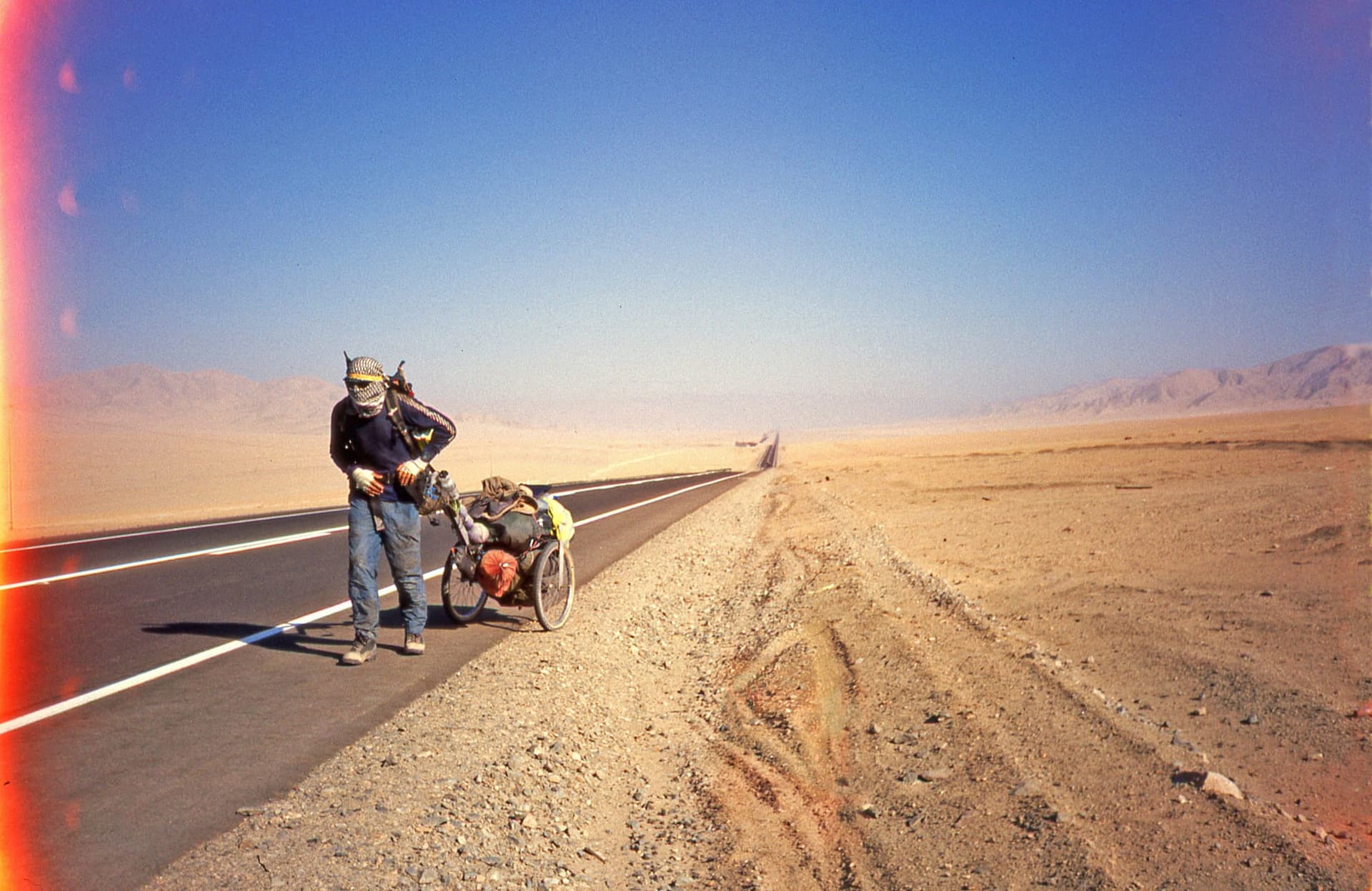
Back on Chile's Pan-American Highway, Route 5, the coast offered just enough to keep moving: discarded food left by passing drivers, whatever could be foraged from the hedgerows. It fuelled thirty kilometres a day — on most days. Karl pushed north through Santiago, then into the Atacama Desert, the driest terrain on the continent.
By the expedition's first anniversary at the Peruvian border, he had walked over two thousand kilometres from Santiago. In northern Peru he retired The Beast and bought a donkey. Together they climbed more than nine thousand feet through the Andes of Ecuador and Colombia. The donkey gave way to a horse in Ecuador; by the time he reached Colombia's volatile borderlands, he ditched the animals entirely and walked on with a backpack.
Colombia in the late 1990s was running on sixty active fronts of insurgency. At his father's urging, Karl signed a professionally drafted will before pushing forward. He crossed the country nonetheless, sometimes missing active firefights by a single day on either side, and arrived at Medellín.
Love and Fear in Medellín
Karl arrived in Medellín on 1 November 2000 — exactly two years to the day since his first step. Ahead lay the Darién Gap: two hundred roadless kilometres of jungle and swamp, held by guerrillas and paramilitaries, which the British press called the darkest place on earth. But Medellín also brought something unexpected: Catalina. Meeting her changed the period entirely.
For two months, Karl and Catalina worked the problem together. They interviewed military and police commanders, investigative journalists, and locals who had made it through the region. All the while, insurgency raged across Colombia. The kidnapping threat in the city was severe enough that Karl disguised himself as a vagrant to avoid being identified as a foreigner.
When the dry season opened his window, he said goodbye to Catalina and the city, crossed the final ridges of the Andes, and dropped into the jungle.
The Darién Gap
Karl and his father planned the Darién crossing as a military-grade escape-and-evasion exercise, with three contingency routes: a red route through villages for supplies; a hybrid blue route on back-paths; and a black route of total avoidance in disguise. Fifty kilometres north of Medellín, he stepped into bandit country.
He navigated both the AUC paramilitaries and the Colombian military, winning enough cooperation from each to use the northern roads. At the frontline he activated what he called jungle mode and moved through dense canopy toward Riosucio — a town under siege — under cover of darkness, evading patrols over two gruelling nights.
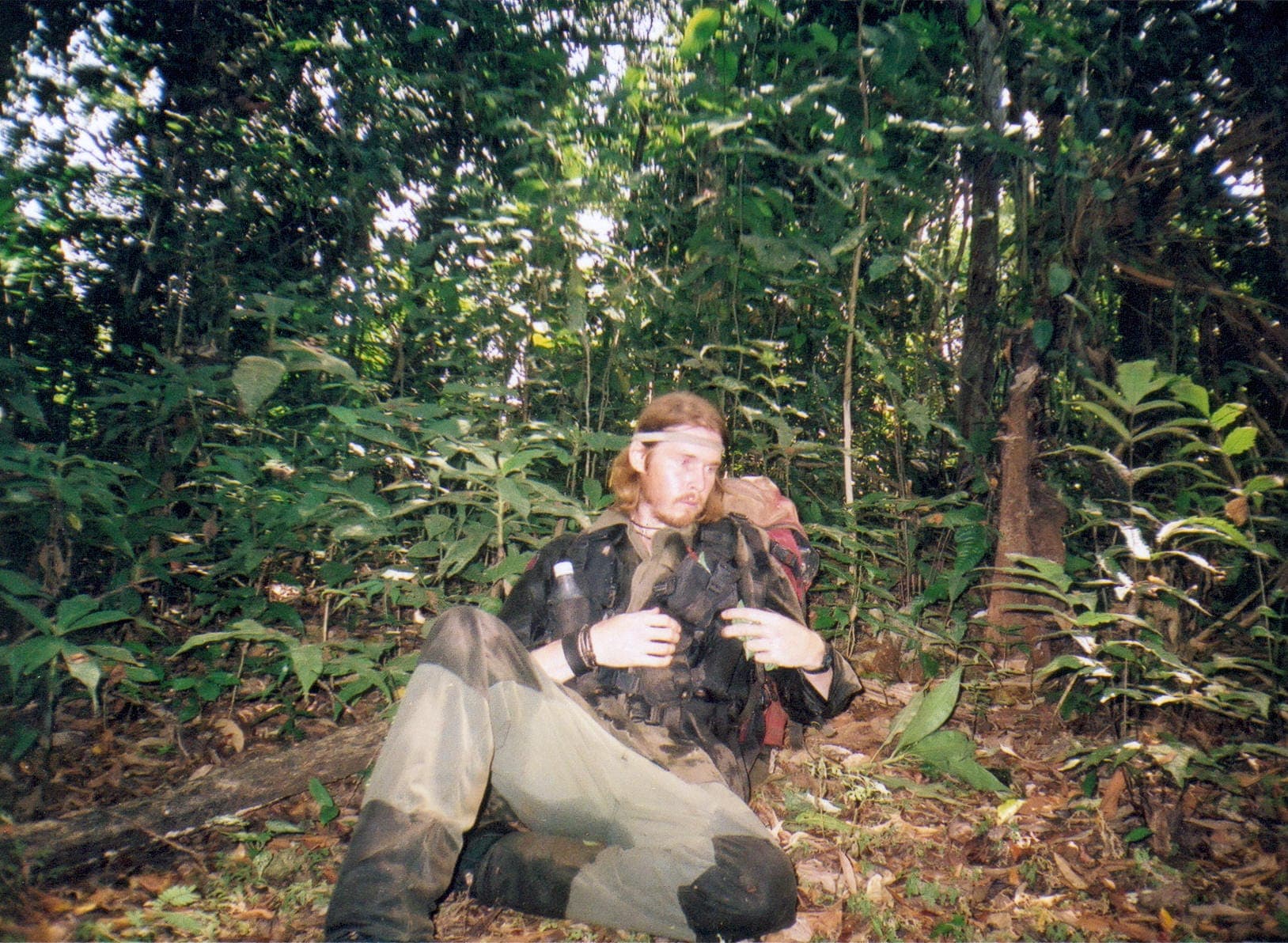
Where the swamp became impassable, Karl disguised himself as floating debris, drifting downriver among clusters of mangrove and crocodiles until he could make for high ground. Ten days through the trackless jungle brought him to the Panamanian village of Paya: a hot meal and the first real rest in weeks.
His re-emergence into civilisation was not smooth. Walking into Boca de Cupe in a green uniform and combat vest, he was met at gunpoint by Panamanian police. He had crossed a restricted border zone during an active conflict without a visa. Karl spent the next eighteen days in a Panamanian jail. Once the authorities understood who he was and what he was doing, he was released. The whole ordeal — war zones, paramilitaries, guerrillas, a stint in prison — ended when he walked through the doors of the British Embassy in Panama City.
The Asphalt Test
Leaving Panama City, Karl crossed the Bridge of the Americas and stepped into a different kind of challenge. The transition from roadless wilderness to the congested corridors of Central America brought a new hazard: heavy traffic on narrow highway shoulders, some of the most stressful road-walking of the expedition so far.
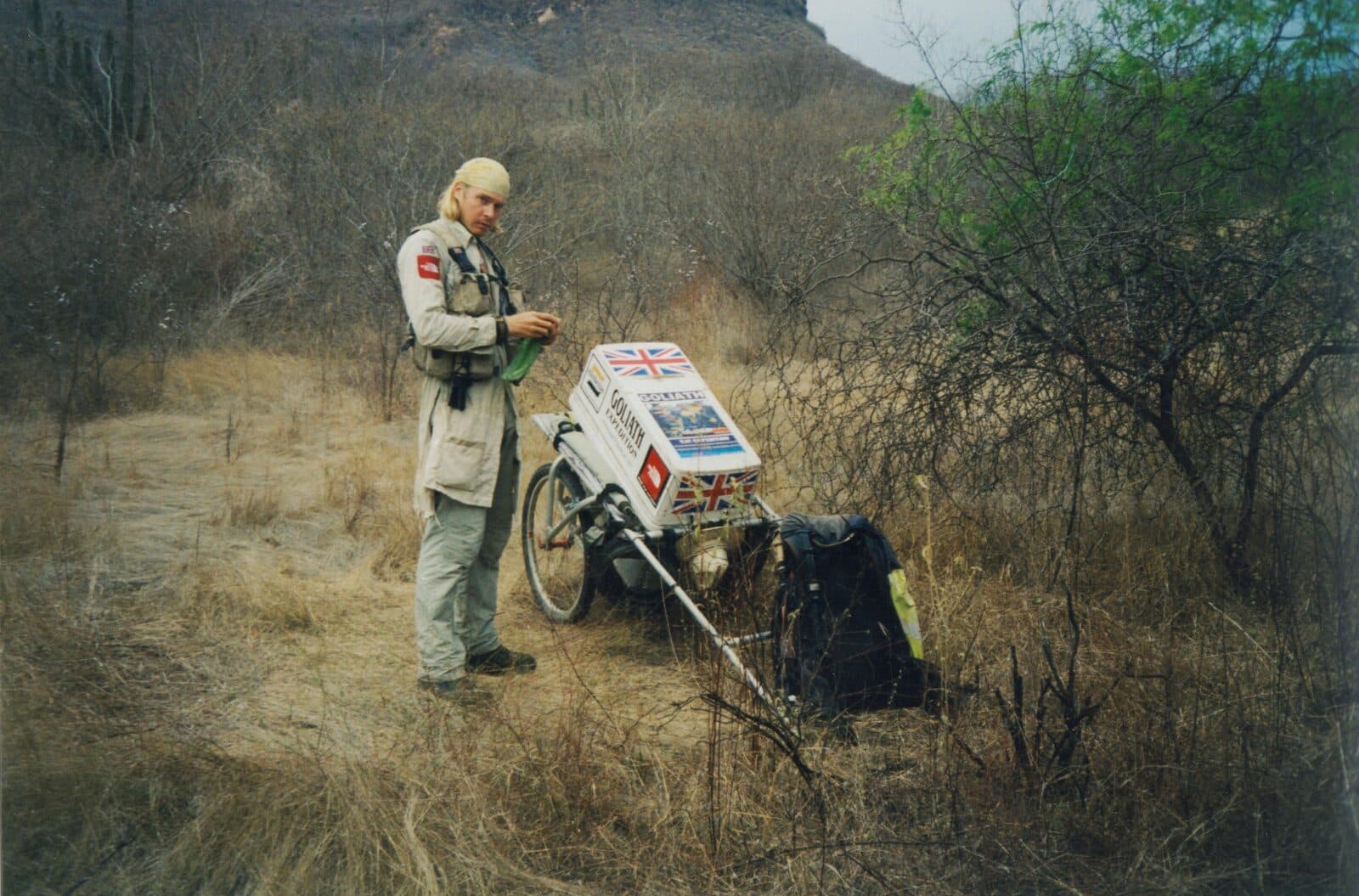
He pushed north through Costa Rica, Nicaragua, Honduras, El Salvador, Guatemala, and into Mexico. In León, Nicaragua, needing a way to carry his gear across what still lay ahead, Karl visited a local technical school, used their workshop, and welded a successor to The Beast. The new cart, christened The Beast 2, proved so resilient it remains with him today.
North America
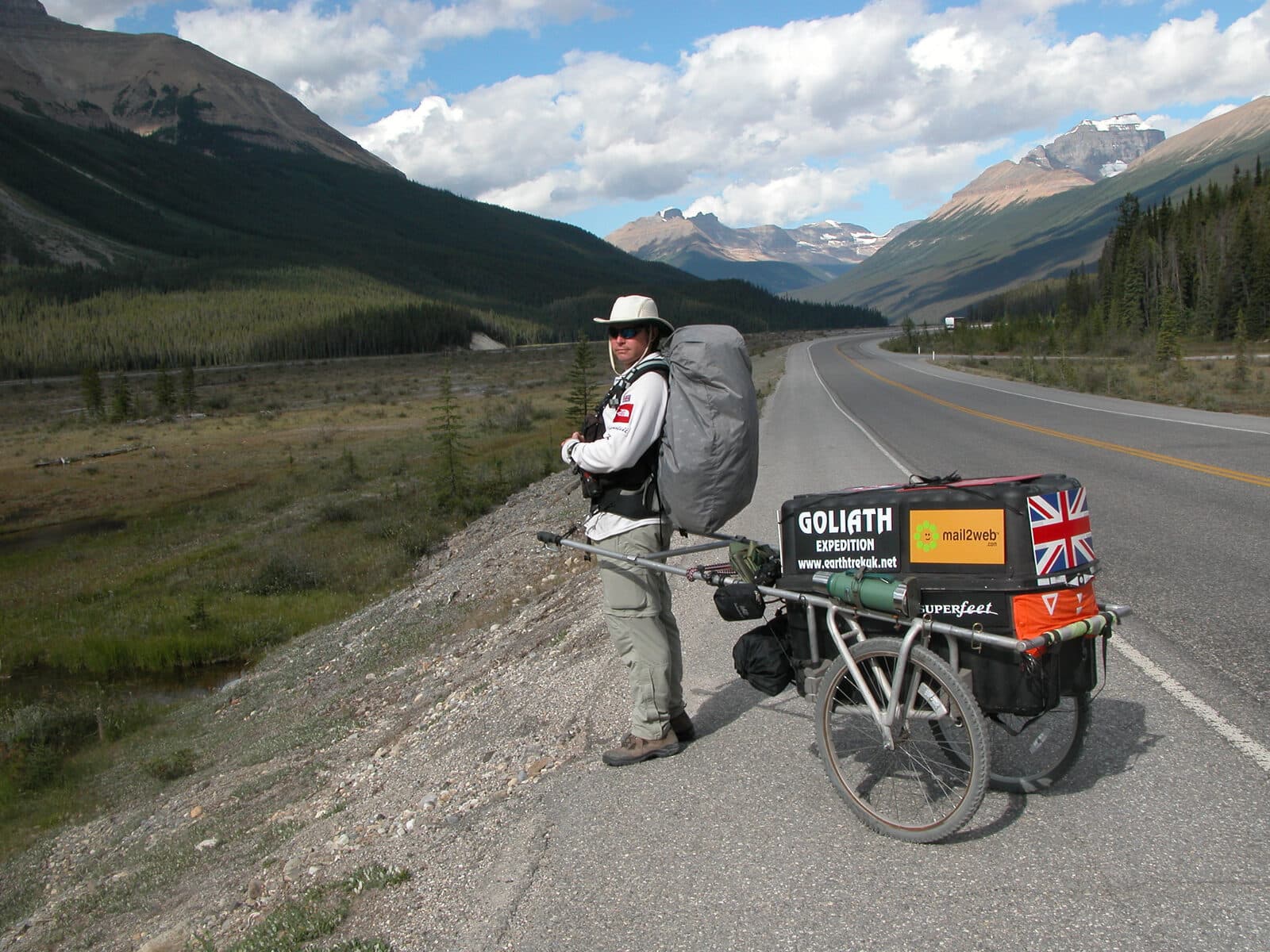
In May 2002, Karl reached the United States border at Nogales, Mexico. Surviving in North America was a different equation from Latin America; without steady funding, the higher cost of living could stop the walk. But support arrived just as he crossed: a Canadian web hosting company stepped in to manage the expedition website and provided baseline monthly funding. Shortly after reaching Tucson, Arizona, gear manufacturer Superfeet joined as a formal sponsor. A BBC crew arrived to film him for a weekend.
Financial relief brought bureaucratic friction. Karl was now subject to a strict grid of regulations: which roads he could use, where he could pitch his tent. Local police became a daily presence.
He pushed through the American southwest in temperatures above fifty degrees Celsius, north into Nevada, and up through Montana — where The Beast 2 was stolen from outside a café near the Canadian border. Karl spent a month in Helena building a replacement, only for the original to turn up abandoned in a local quarry. Reunited, he ground through a brutal winter on the Trans-Canada Highway toward Calgary, detoured through the British Army Training Unit at Suffield to resupply, and tackled the Alaska Highway at temperatures of minus forty.
The End of the Road
In May 2004, Karl walked into Fairbanks, Alaska — the absolute end of the paved road. The challenge now was reaching the Bering Strait, but crossing the marshy Arctic tundra was impossible during summer months. The expedition halted and waited for winter to freeze the rivers into usable roads north.
The pause was made viable by a breakthrough at home: his father secured a book agent, and a publisher's advance allowed Karl to re-equip and train for an entirely new environment. In December 2004 he set out from Fairbanks into the Alaskan interior. He returned forty pounds lighter, having survived still-air temperatures down to minus fifty-one degrees Celsius.
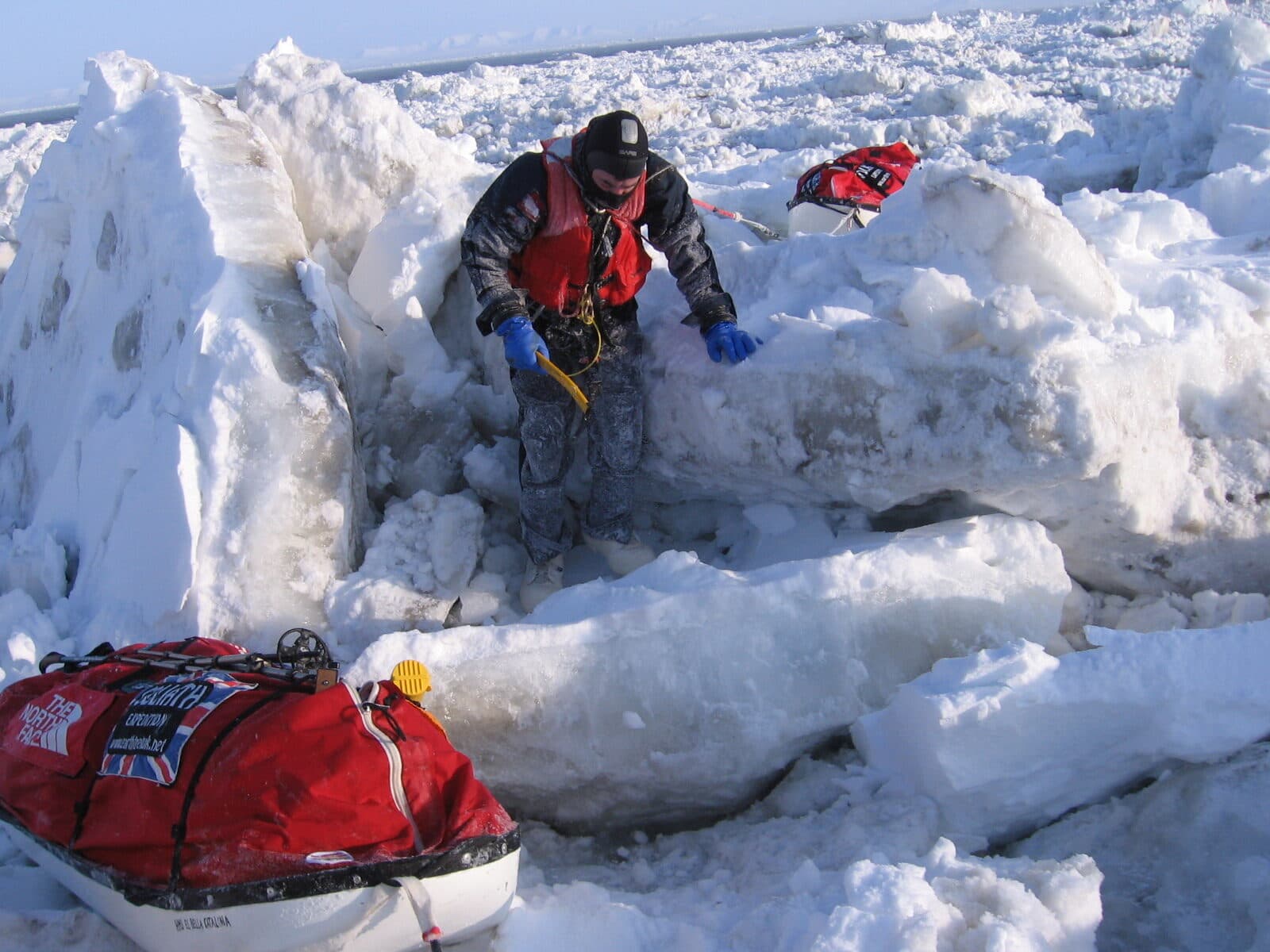
While waiting out the following summer, Karl met French-American adventure racer Dimitri Kieffer, who had followed the expedition and wanted a partner for the Bering Strait. Even reaching the crossing's starting point was punishing: before Nome, Karl survived coastal blizzards and a midnight fall through unstable sea ice on Norton Sound. In one storm he and Dimitri were driven thirty kilometres out to sea on floating ice and had to be rescued by helicopter.
The Bering Strait
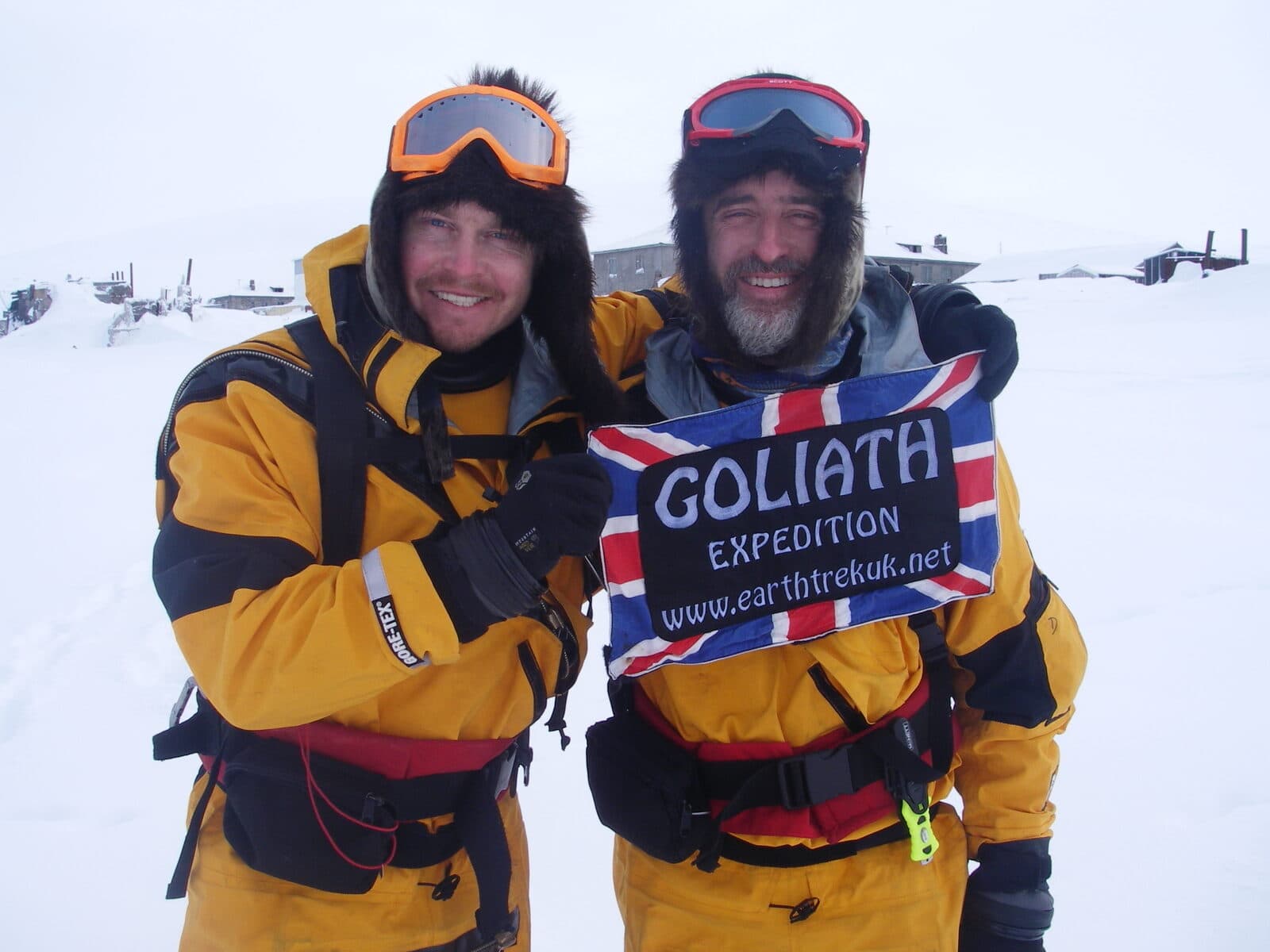
In March 2006, Karl and Dimitri Kieffer stood at the edge of the American continent. The Bering Strait had been attempted before; no one had crossed it on foot in this way. On 17 March 2006, they stepped onto the ice.
The first days nearly ended it. The pair were dragged fifty miles north by relentless currents, trapped among open water and crumbling ice. Failure seemed inevitable. Then the Arctic shifted: the current swung them south, the wind dropped, and the temperature crashed from zero to near minus thirty-five, hardening treacherous slush into solid ice. As Karl described it: 'It was like being Moses watching the Red Sea part.'
They marched west across the International Date Line into Russian waters, losing hard-won daytime mileage each night to the drifting ice, until one large day of progress put the anchored Russian coast within reach. To cross the strait's fifty-eight-mile width, they had navigated a fourteen-day, 150-mile zigzag route. They stepped ashore near the Chukotkan village of Uelen — and were immediately detained by Russian border troops for entering the country outside an official port.
For nearly two months the expedition hung in the balance, facing deportation and a multi-year ban that would have ended it permanently. On 5 May 2006, a Russian appeals court cleared Karl to continue. It later emerged that the release involved high-level diplomacy — between Roman Abramovich, then governor of Chukotka, and John Prescott, then the British deputy prime minister and MP for Karl's home city of Hull.
The Russian Expanse
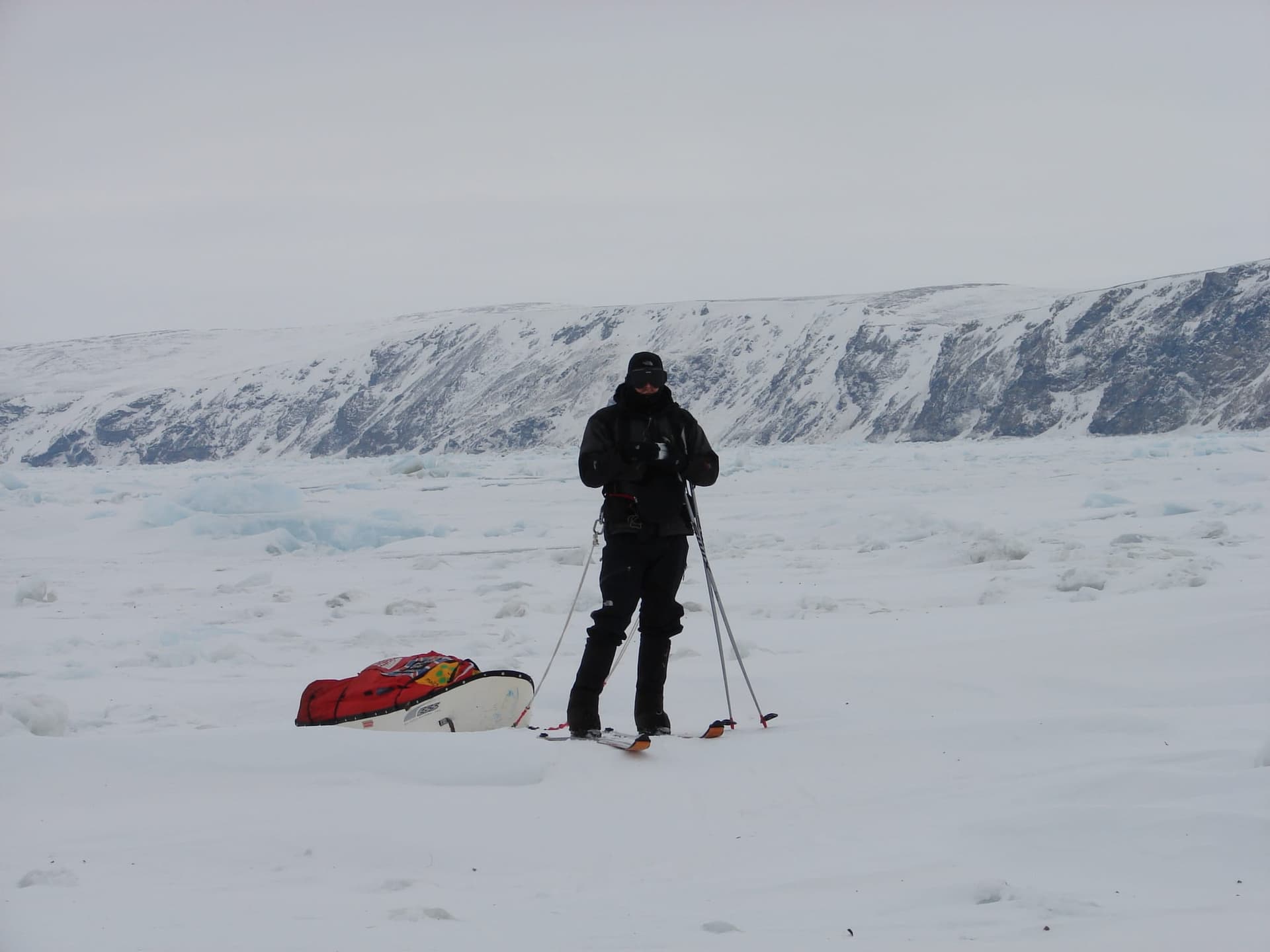
On 16 March 2007, the Russian leg of the walk received its green light. Permits to enter this heavily guarded military zone had taken months of paperwork to secure. Karl forged from Uelen into the Siberian interior — Amguyma, Dvoynoye, Bilibino — advancing only in winter, when frozen tundra and rivers could carry him. Three-month visas expired and forced retreats back to Alaska. Russian law capped him at ninety days in every hundred and eighty. The walk became a high-stakes game of hopscotch against visa windows.
Then a different kind of storm arrived. The financial crisis of 2007–2008 wiped out his core sponsors. Without funding for permits or logistics, the expedition stopped. Karl retreated to Mexico from late 2008 through 2010, surviving on almost nothing while the walk hung in the balance. Finding new backers in the middle of a global recession was its own test of endurance. By 2010, persistence won him a fresh wave of sponsorship. In the spring of 2011 he stepped back onto the Siberian trail.
5,600 km in the Wrong Direction
On 12 April 2012, Karl received the news: Russian authorities had officially denied the next visa. The Goliath Expedition had hit a paper wall. Facing immovable bureaucracy, he did the only thing he knew how to do — he started walking. In the wrong direction.
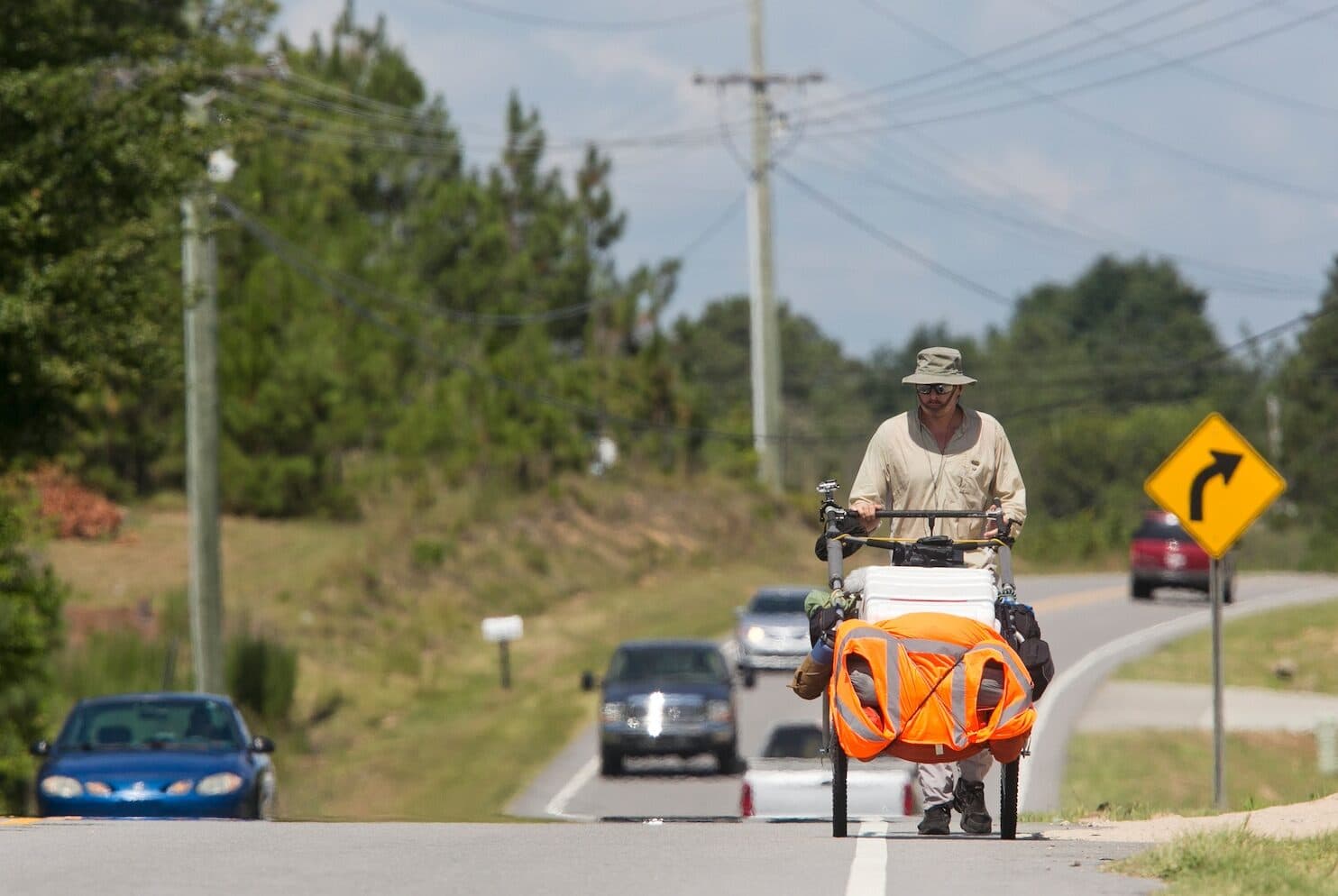
Leaving his sponsors' base in Los Angeles, he set out on a 5,600-kilometre trek across the United States, sea to shining sea, aimed at the front doors of the Russian Embassy in Washington, D.C. It was a year-long walk of pure protest: a rolling media campaign built to prove his determination and move a political needle that would not otherwise shift.
The gamble paid off. By the time he reached the capital, the global attention he had generated was enough. The Russian government reversed the ban and issued a formal letter of invitation. In 2014, he walked out of the embassy with a new visa — the end of a detour of thousands of kilometres in entirely the wrong direction.
The Mongolian Steppes
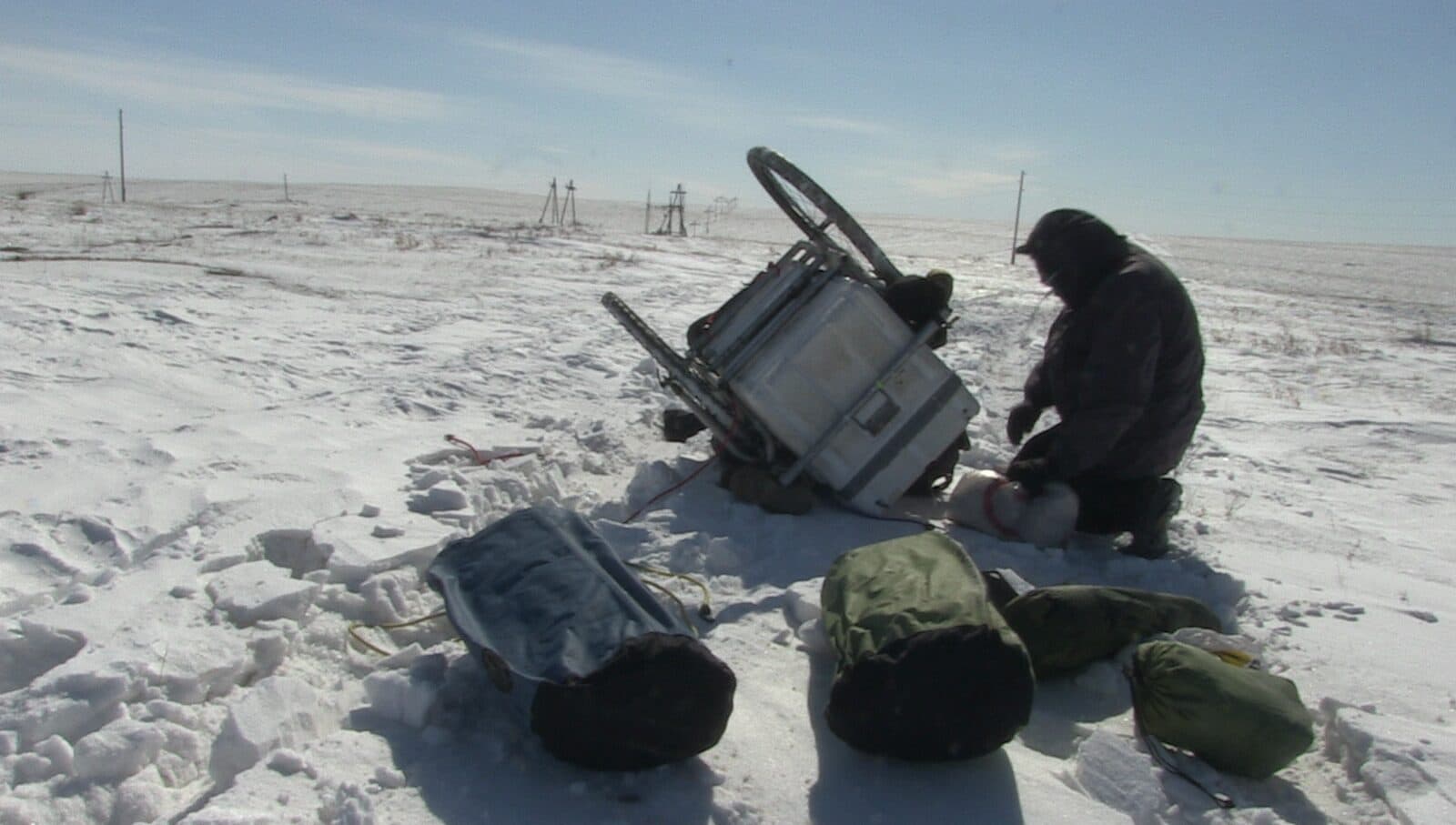
Back across Russia and into Mongolia, Karl arrived in Ulaanbaatar on 8 August 2017. Here the walk took its most ambitious detour. Working with explorers from the UK, the US, Turkey, and Mongolia, he assembled a plan to cross Central Asia along the historic Silk Road using a caravan of ten Bactrian camels. A training camp west of the capital spent five months preparing the animals for the haul ahead.
Just before winter, the caravan set out and covered more than a thousand kilometres across the unforgiving steppe. Then the strain told — internal disagreements and rising tensions fractured the group. The caravan dissolved. Karl left it behind and crossed into China alone.
China
In 2018, Karl crossed into China and stepped into the most heavily surveilled ground of the entire route. Through Xinjiang the security hardened in concentric rings radiating out from Urumqi: first an endless canopy of cameras every hundred metres along the highways, then biometric checkpoints every few kilometres that could delay him two hours at a time, then unmarked cars tailing him for days.
Eventually a lone officer fell in beside him without a word and walked him to a roadside tyre-repair shack, where plainclothes police arrived in three tactical groups. They stripped and searched his gear, logged his electronics, and confiscated his footage. He was removed from the road and confined to a hotel under guard. The verdict, delivered across a lobby table: the walk was over. They would drive him to the Kazakh border. Accepting any vehicle ride would have broken the continuous-walking rule and ended the expedition permanently.
Given his phone back briefly, Karl fired off an emergency text to his team in Los Angeles and hit send just as they took it from his hands. The British Embassy intervened. The police let him keep walking — under a strictly mandated route, a twenty-four-hour escort, no camping, and later no internet access — all the way to the Kazakh border.
The Silk Road
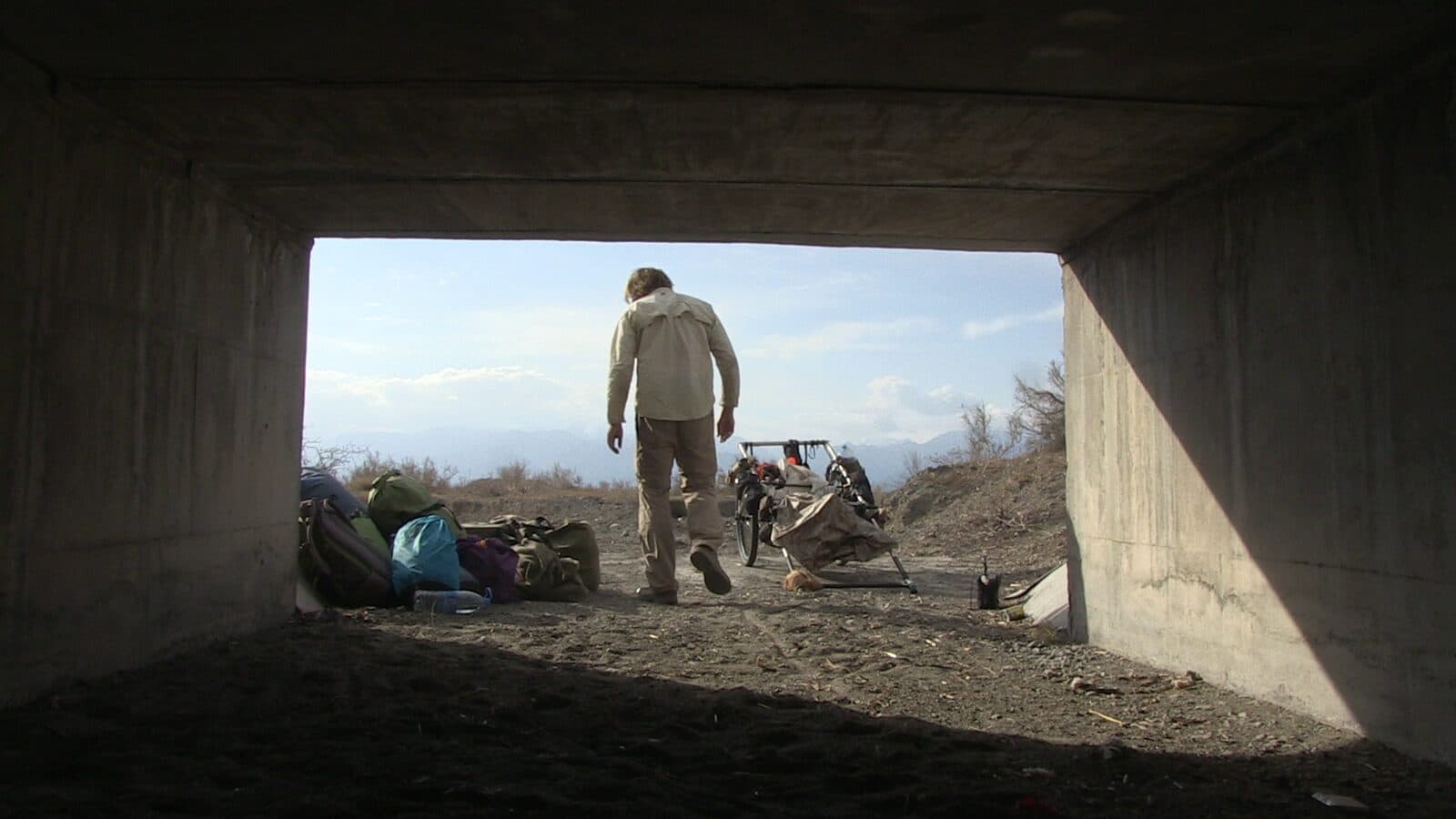
Across the Kazakh border, Karl met up with Rika in Almaty before pressing west. The trail led through Uzbekistan and toward Samarkand — its ancient streets and architecture a stark change from the weeks of surveillance behind them. Together, Karl and Rika followed the Silk Road through Samarkand and the old trading hub of Bukhara, heading toward Turkmenistan.
In the relentless mid-summer heat, Karl's body hit a wall. He suffered a severe case of heatstroke and was hospitalised for several days. He recovered and got back on the road. At the Turkmenistan border, visa restrictions forced a separation: Karl crossed alone.
Turkmenistan required a strict thirty-day visa and a government-mandated twenty-four-hour escort. With the escorts hauling the bulk of his gear, Karl marched light through weeks of the Karakum Desert, reaching the Iranian border as his Turkmen visa ticked down to its final hours.
The Iranian Wall
Entering Iran was the most complex geopolitical puzzle of the entire route. Karl flew back to the United States to plan with his management team. The immediate problem: US sanctions legally barred his American sponsors from funding or being associated with a crossing of Iran. The expedition had to find independent financial and political allies inside the country and completely bypass its traditional backing structure.
As they worked on this, the global picture deteriorated rapidly. Iran-backed elements struck Saudi oil refineries. Talk of direct US-Iran military conflict dominated international headlines. Then the assassination of Iranian General Qasem Soleimani in January 2020 severed all communication with Karl's Iranian contacts overnight. He was back at square one.
Karl dug in and waited. By the spring of 2020, he had reopened channels with Iranian officials. Then the world stopped. Iran was among the earliest countries outside of China to be overwhelmed by COVID-19. By the end of March 2020, international borders were closing across the globe. The trail had vanished. In the same period, his relationship with Rika — three years in — ended. It was the worst stretch of the walk since the financial crisis.
Turkmenistan never reopened. The planned northern reroute through Russia ended with Russia's invasion of Ukraine in 2022. Iran remained unreachable. Every land route forward was sealed.
The Caspian Sea
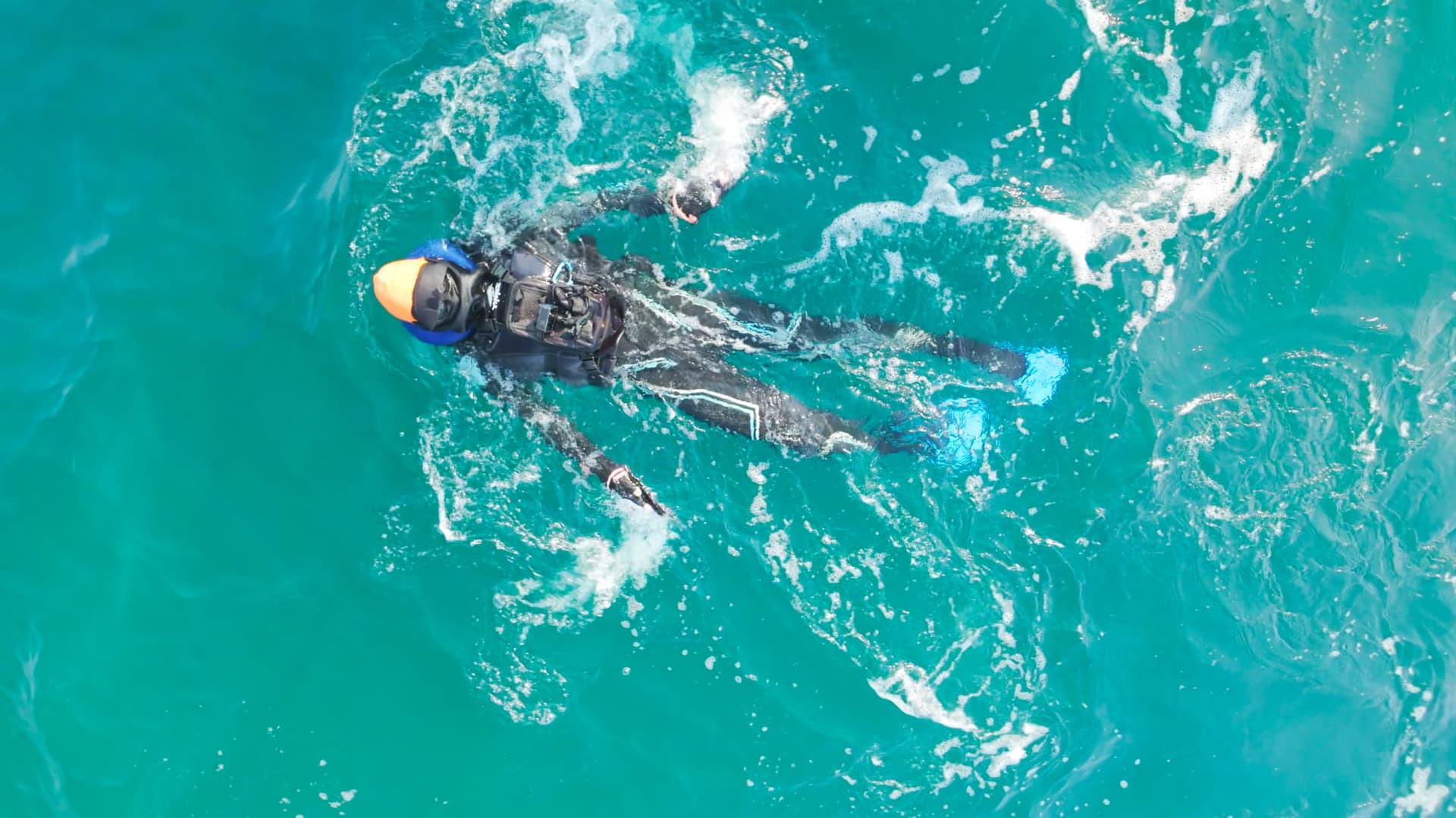
With every land route sealed, the expedition deployed Plan C: a straight-line swim across the Caspian Sea from Kazakhstan to Azerbaijan, approximately three hundred kilometres of open water. It was not what Karl had imagined when he left Chile in 1998. But the core rule had not changed: whatever it takes.
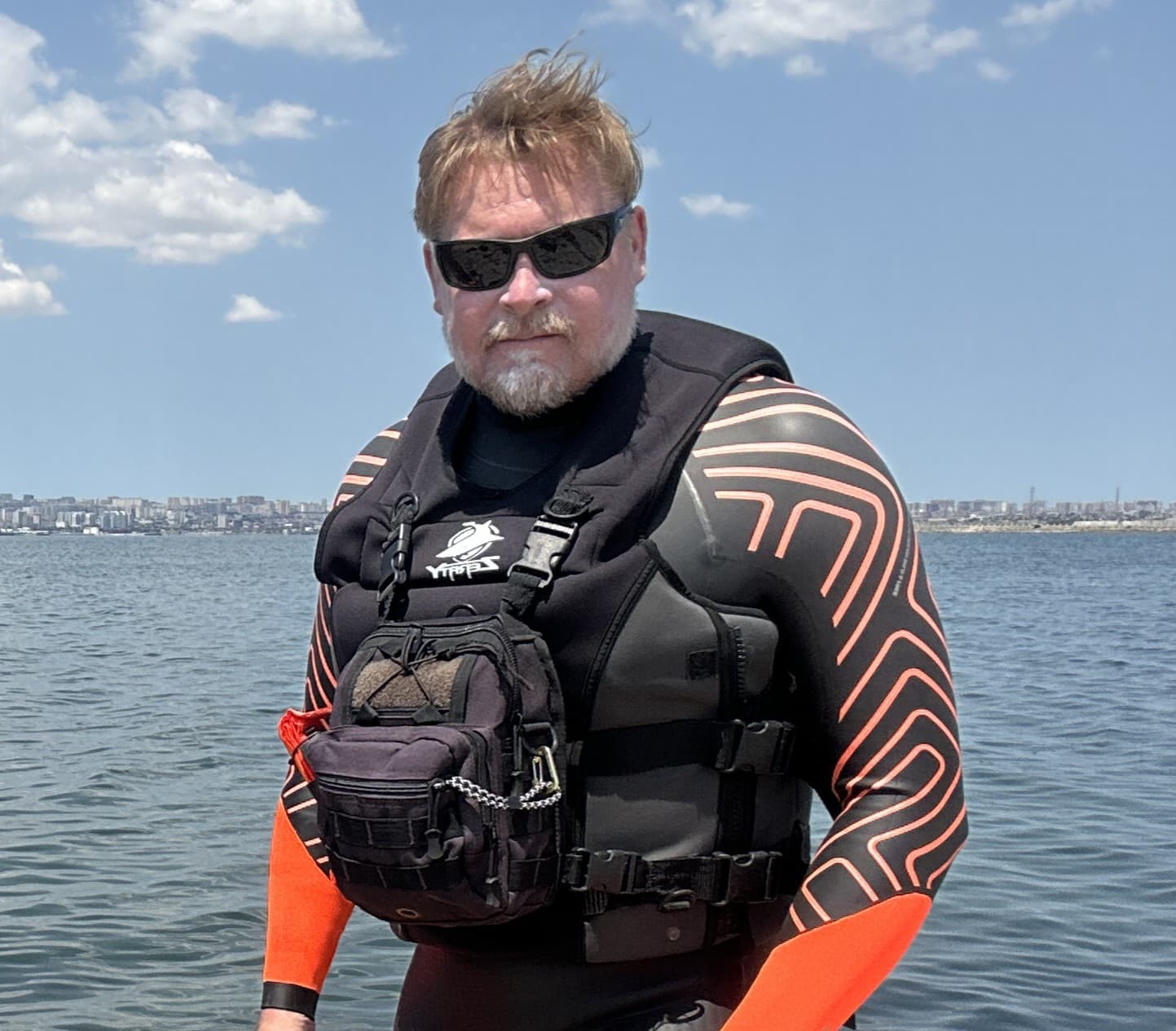
Supported by two escort vessels — a local support boat from the Kazakh port of Aktau and an Azerbaijani Coast Guard ship — Karl was joined in the water by fellow explorer Angela Maxwell and Azerbaijani national swim champions Anastasiya Boborikina and Abdurrahman Rustamov. They pushed forward in six-to-nine-hour shifts, battling waves, nausea, and the psychological weight of an environment Karl and Angela were not built for.
After thirty-one days at sea, 288 kilometres of unpredictable currents, and more than 132 hours in the water, the team stepped ashore in Azerbaijan to a hero's welcome. Backed fully by the Azerbaijani government, they had crossed the sea.
The Gateway to Europe
On 10 November 2024, fresh off the Caspian, Karl walked out of Baku and turned for the Bosphorus. Five months and more than two thousand kilometres later — across Azerbaijan, Georgia, and the rugged expanse of Turkey — he reached Istanbul on 25 April 2025.
Istanbul was more than another checkpoint: it was the physical and symbolic gateway to Europe. A week after arriving, Karl secured rare permission to cross the 15 July Martyrs Bridge — the old Bosphorus Bridge — entirely on foot. Walking high above the shipping lanes, he stepped off the bridge onto the European side, on his home continent for the first time in decades.
A little over three thousand kilometres stand between him and the UK. The final countdown has begun. One last stretch of water still lies between him and home: the English Channel, still unresolved.
Bring Karl to your stage
The walk ends this autumn, and the months around the finish book once. Tell us the room, the city, and the timing, and you will get a straight answer on fit and dates. The inquiry takes two minutes.