The LongestJourney Home

Karl Bushby left Chile in 1998, headed home to the UK with only two rules: no transport to advance, and no going home until he arrived on foot.

Distance49,110 kmas of 6 June 2026
Chile1998
England2026
01

The Story

Twenty-eight years, one line on the earth.

The ex-paratrooper from Kingston upon Hull, England, had never done anything quite like this. Who had?

On the first of November 1998 he walked out of Punta Arenas, Chile with a few hundred dollars in his pocket, turned north for home, and stepped onto the line.

A line drawn on a map: four continents, a frozen sea, deserts, mountains, jungles, and over 50,000 km of unknown.

The plan never changed: keep walking, swim when he must, until the line reaches his mother's front door.

No transport to advance. No compromising the route.

Stay on mission, get home.

Nearly three decades later the line remains unbroken and the mission is almost complete.

900 km remain, and the last geographical obstacle: the English Channel.

A journey defined by two rules

Rule one

No transport to advance

Rule two

No going home, except on foot

Kept, both of them, for ten thousand days.

02

The Journey

One line home, held through jungles, ice, closed borders, long waits, and the ordinary kindness that kept him moving.

Read the full story
Route ledger1998-200001 / 10
Day
KM est.
Date
  • Walked
  • Remaining

Where he is nowNorthern Europe. On the road through Europe, closing on the English Channel. As of June 2026.

  1. Chile to Colombia

    Lines on a Map

    In the mid-1990s a birthday card from his father carried a note about two soldiers arguing over an impossible feat: walking from London to New York by way of the Bering Strait. Karl grabbed a marker, walked to his wall map, and drew a single line — from England, across Europe and Asia, over the frozen strait, and all the way down to the southern tip of South America. Looking at that unbroken line, he knew he had found his life's mission. On 1 November 1998 he stepped out of Punta Arenas, Chile with about five hundred dollars, no sponsors, and two rules: no transport to advance, and no going home except on foot.

    Read more…Show less

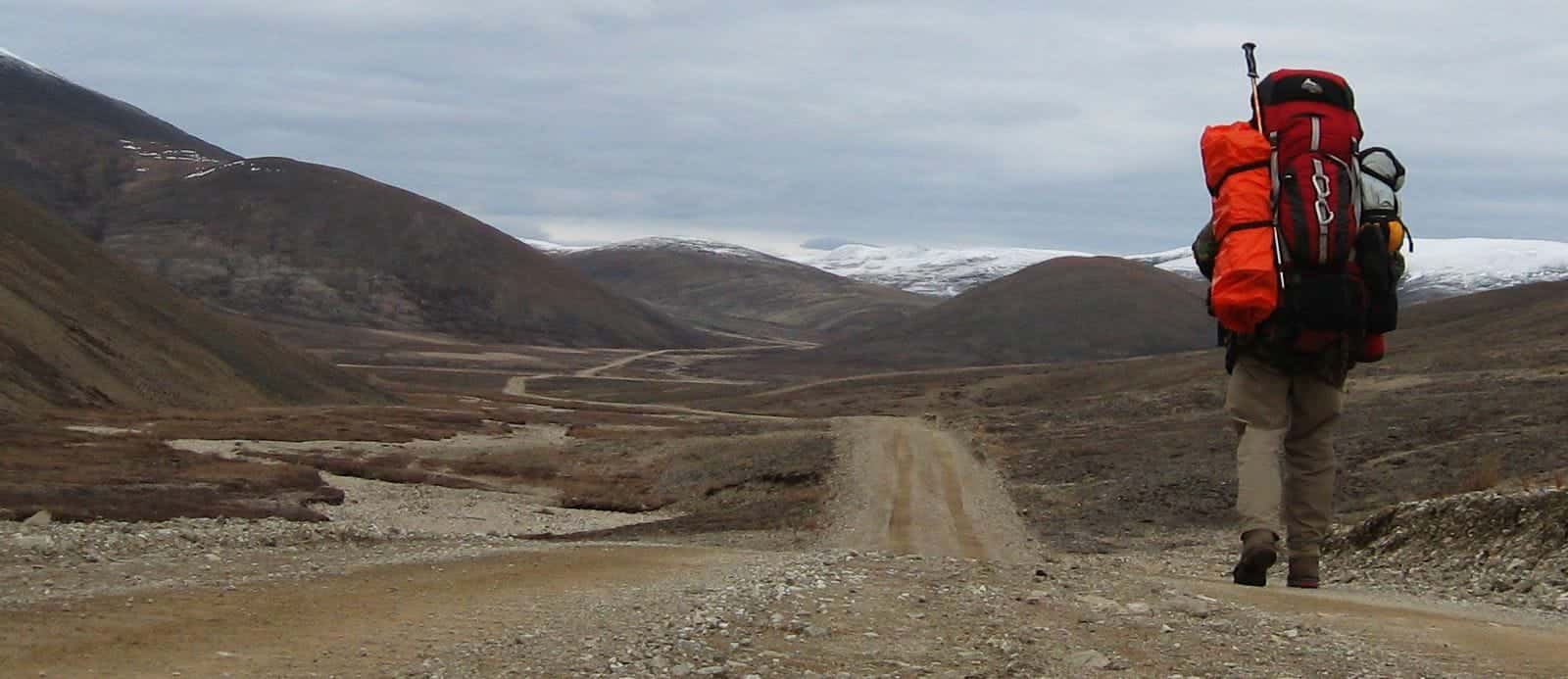
    Patagonia hit first — hurricane winds that bent him to a forty-five-degree lean and tore him and his cart off the road for days on end. Through the Atacama and the thin air of the high Andes came the hunger days, living on discarded food and roadside forage at thirty kilometres a day. Two years in, he reached Medellín, and the darkest obstacle on his map.

    Before he ever left, Karl was stationed at Dover, and on clear days he would stand on the white cliffs and picture the weathered figure he might one day become, arriving on the European coast from the far side of the world. Closing that loop was the whole point of everything that followed.

    Crossing war-torn Colombia in the late 1990s, he signed a professionally drafted will at his father's urging — yet passed through the country like smoke across a battlefield, untouched, sometimes missing active firefights by a single day.

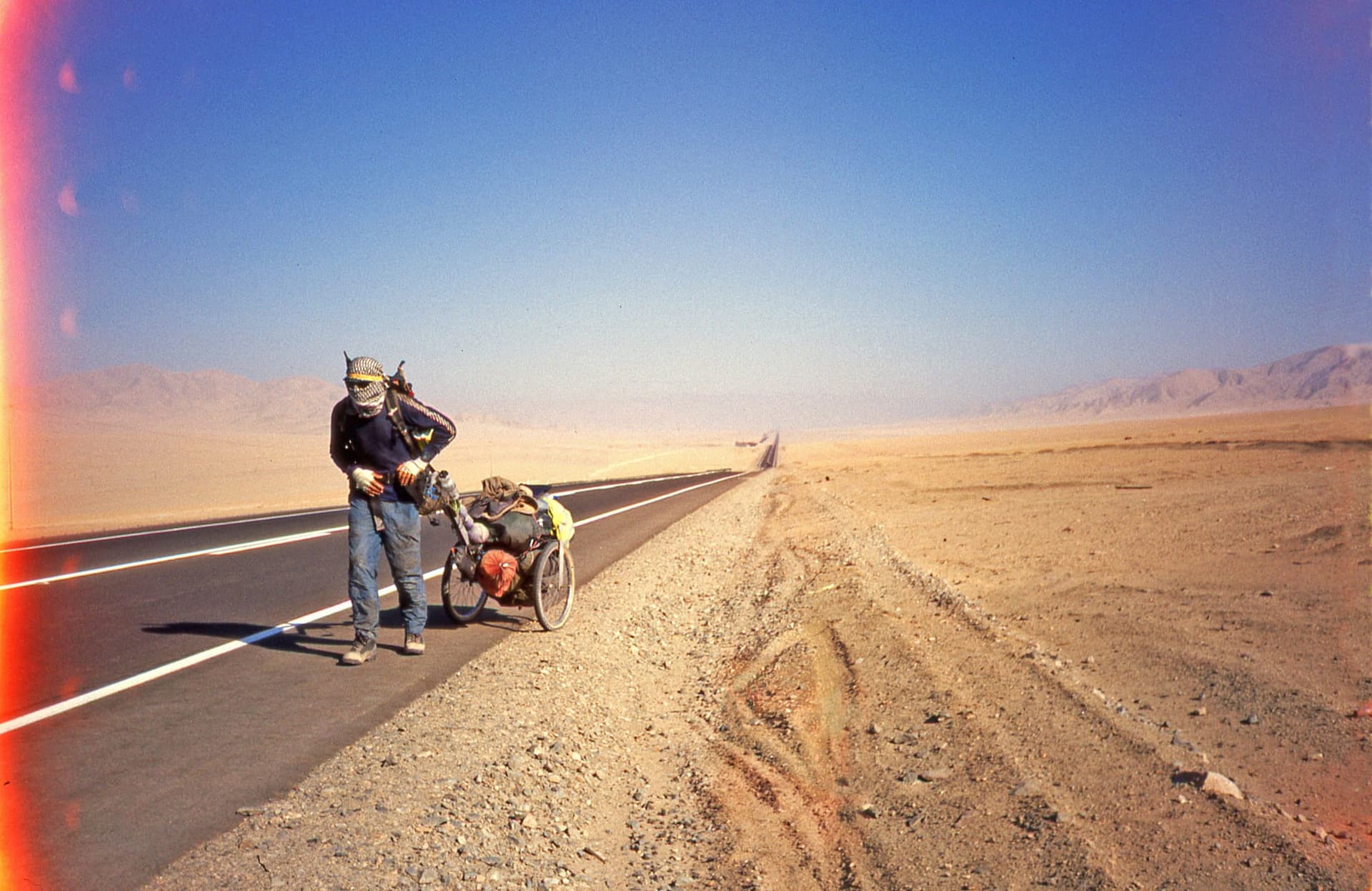
    Karl Bushby in the early years of the walk, hauling his cart along an empty desert highway in South America.
  2. Colombia to Panama

    The Darién Gap

    Between Colombia and Panama the road simply gives out: two hundred kilometres of roadless jungle and swamp that the British press once called the darkest place on earth, held by guerrillas and paramilitaries locked in a three-way war. In Medellín, Karl spent two months planning the crossing like a military evasion — interviewing soldiers, police, investigative journalists and locals who had survived the region — while living disguised as a vagrant to slip past kidnappers in a city where a foreigner was a target. When the dry season finally opened in 2001, he crossed the last ridges of the Andes and dropped into the Gap.

    Read more…Show less

    He moved at night past FARC patrols, and where the swamp made walking impossible he disguised himself as floating debris, drifting downriver among the mangroves with the crocodiles until he could strike for high ground. Ten days in the trackless heart of the jungle brought him to the Panamanian side, living on what he could fish and forage. He re-emerged near a village in a green combat uniform, was met at gunpoint, and — having crossed a restricted border zone during an active war — spent eighteen days in a Panamanian jail before the walk could go on.

    With his father back in the UK, Karl planned the Gap as a full escape-and-evasion exercise, with three contingency routes: a red route through towns for supplies, a hybrid blue route on back-paths, and a black route of total avoidance in disguise. On the ground he won the grudging favour of both the paramilitaries and the army to use the northern roads.

    After a brief sanctuary with soldiers in besieged Riosucio, he pushed on through the jungle to Paya for a hot meal and rest. The whole ordeal — active war zones, paramilitaries, FARC, and a spell in prison — ended only when he finally walked through the doors of the British Embassy in Panama City.

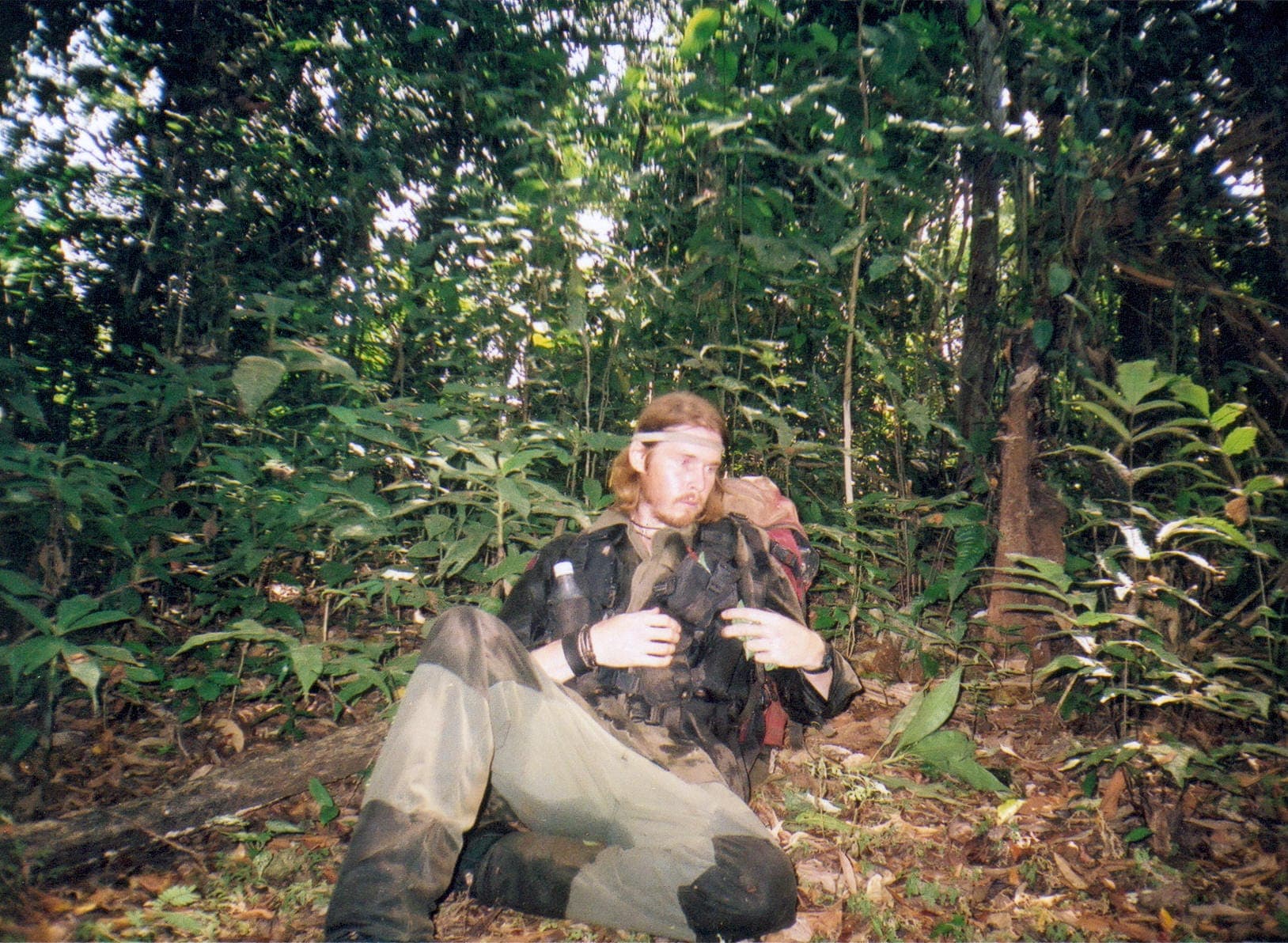
    Karl Bushby resting on the jungle floor in the Darién Gap, mud-caked and exhausted, dense rainforest around him.
  3. Panama to Alaska

    North America

    From Panama the walk became a test of endurance on asphalt: thousands of kilometres of congested highway shoulder through Central America, where in León, Nicaragua he welded the cart, “The Beast 2”, that is still with him today. At the US border sponsors finally came aboard and a BBC crew filmed him, but so did a grid of Western rules about which roads he could use and where he could pitch a tent, with local police a daily fixture.

    Read more…Show less

    He crossed the American southwest in fifty-degree heat, lost the cart to thieves in Montana and recovered it from a quarry, then ground through a brutal winter up the Trans-Canada and the infamous Alaska Highway at forty below. In 2004 he reached Fairbanks — the end of the paved road — where the route ran clean out of continent and he had to stop and wait for the rivers to freeze into a road north. That first winter he walked out into the Alaskan interior and came back forty pounds lighter, having survived still-air temperatures near minus fifty.

    The long pause was only affordable because of a breakthrough at home: his father secured a book deal, and a Time Warner advance let Karl completely re-equip and train for a frozen world. While waiting out a summer he met French-American adventure racer Dimitri Kieffer, who knew the expedition well and was looking for a partner to take on the Bering Strait.

    Even reaching the strait's starting line was punishing. Before Nome, Karl survived savage coastal blizzards and a midnight fall through the unstable sea ice of Norton Sound, and in one storm he and Dimitri were driven thirty kilometres out to sea on floating ice and had to be lifted off by helicopter.

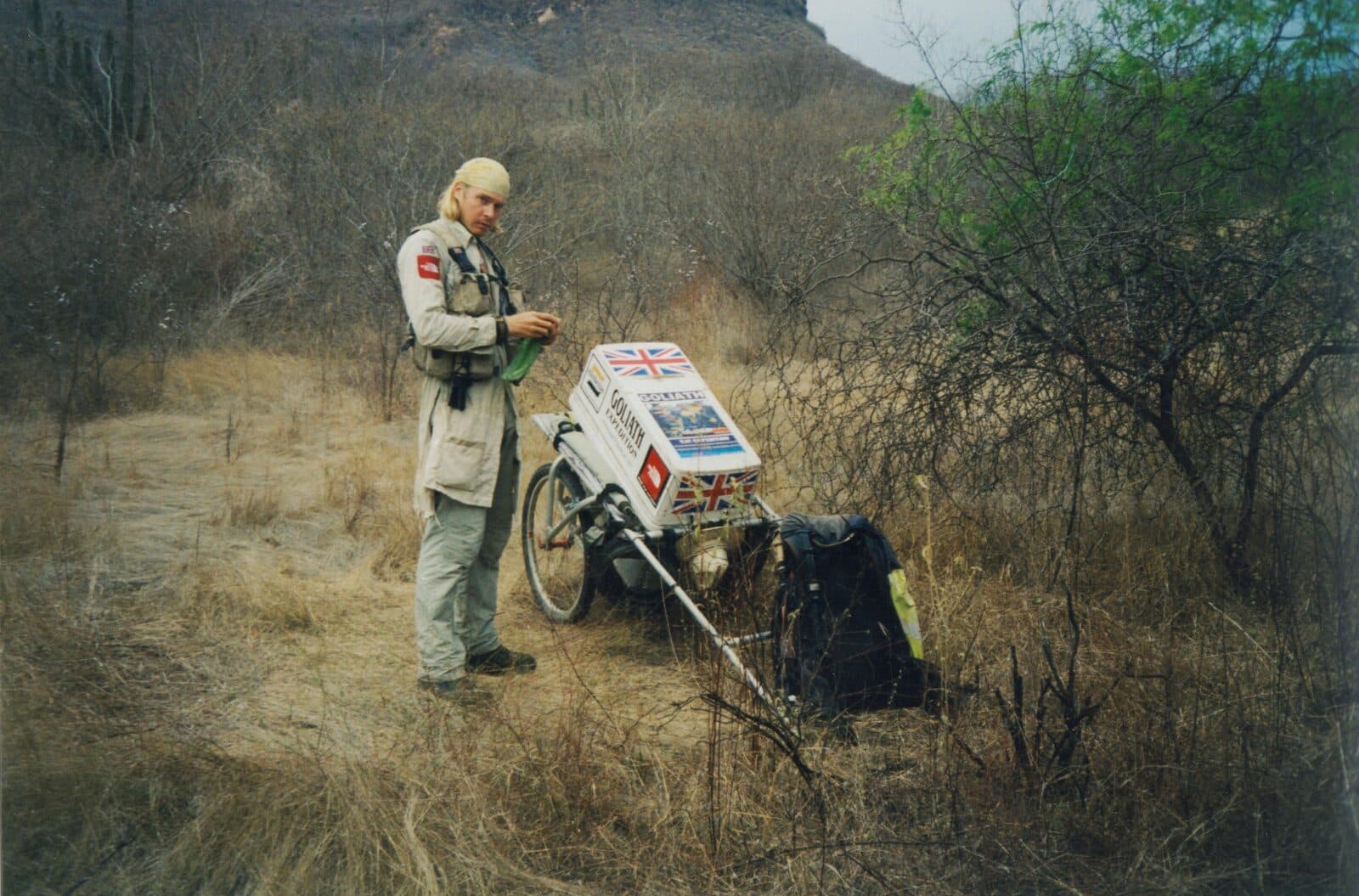
    Karl Bushby with his Goliath Expedition cart on arid scrubland in Mexico, dry hills rising behind him.
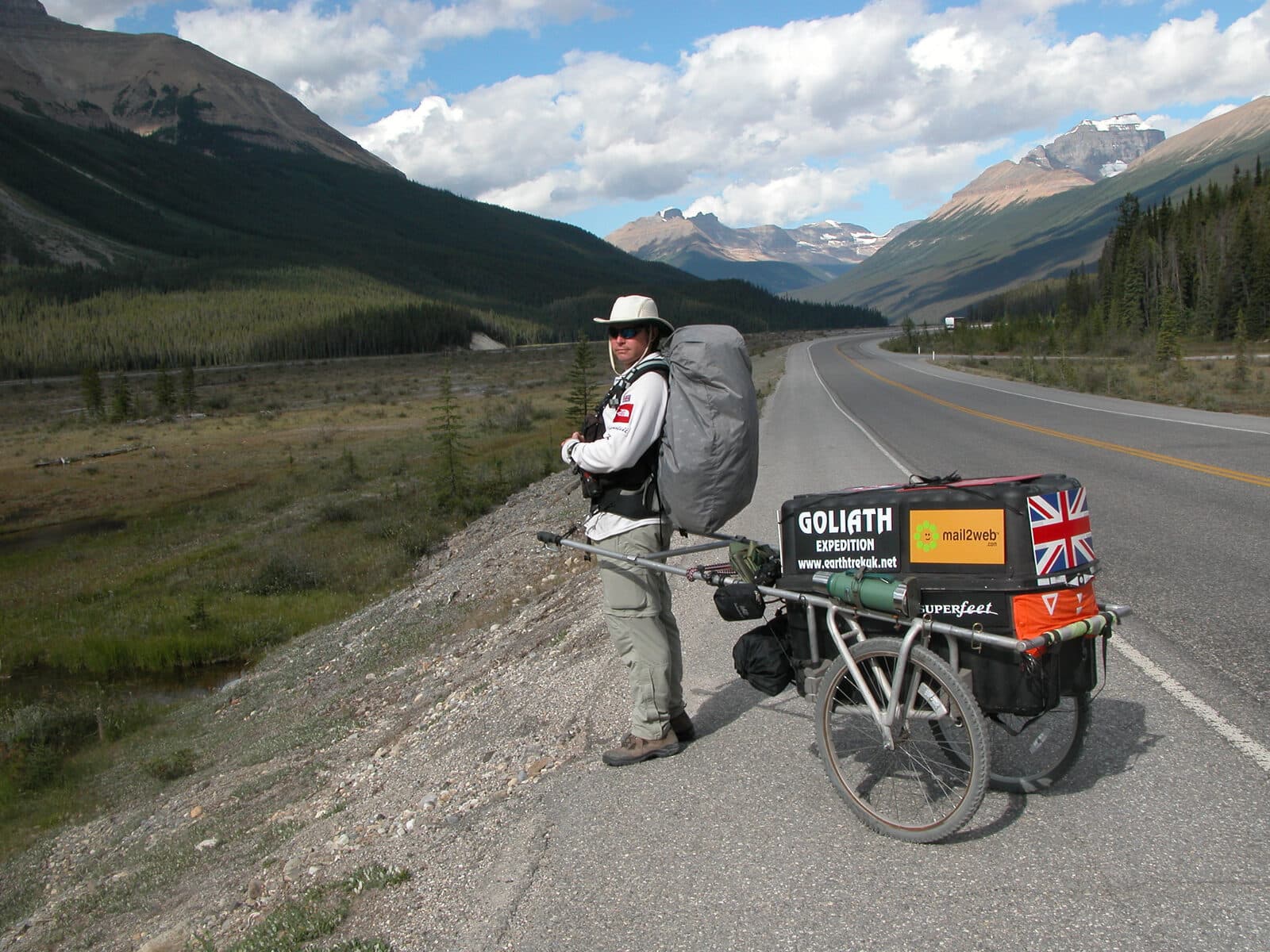
    Karl Bushby hauling his cart along an empty highway through the Canadian Rockies, snow-capped peaks ahead.
  4. Alaska to Russia

    The Bering Strait

    In March 2006, Karl and French-American adventurer Dimitri Kieffer walked out onto the sea ice between Alaska and Russia. Many had tried the Bering Strait; all had failed, and no one had crossed it this way in recorded history. The first days nearly ended it — the pair were dragged fifty miles north by relentless currents, trapped among vast sections of open water and crumbling ice, and failure felt inevitable.

    Read more…Show less

    Then the unpredictable Arctic turned: the current swung them back south, the wind dropped, and the temperature crashed from zero to near minus thirty-five, hardening the treacherous slush into solid ice. “It was like being Moses watching the Red Sea part,” Karl said. They marched west across the International Date Line into Russian waters, losing hard-won miles each night to the drifting ice, until one huge day of mileage put the anchored Russian coast within reach. To cross a fifty-eight-mile strait they had walked a tortuous fourteen-day, 150-mile zig-zag. But stepping ashore near the Chukotkan village of Uelen, they were detained on the spot by border troops for entering Russia outside an official port.

    For nearly two months the expedition hung in the balance, facing deportation and a multi-year ban that would have killed it for good. On 5 May 2006 a Russian appeals court cleared him to continue. It emerged later that his release owed to quiet diplomacy far above his head — between Roman Abramovich, then governor of Chukotka, and John Prescott, the British deputy prime minister and MP for Karl's home city of Hull.

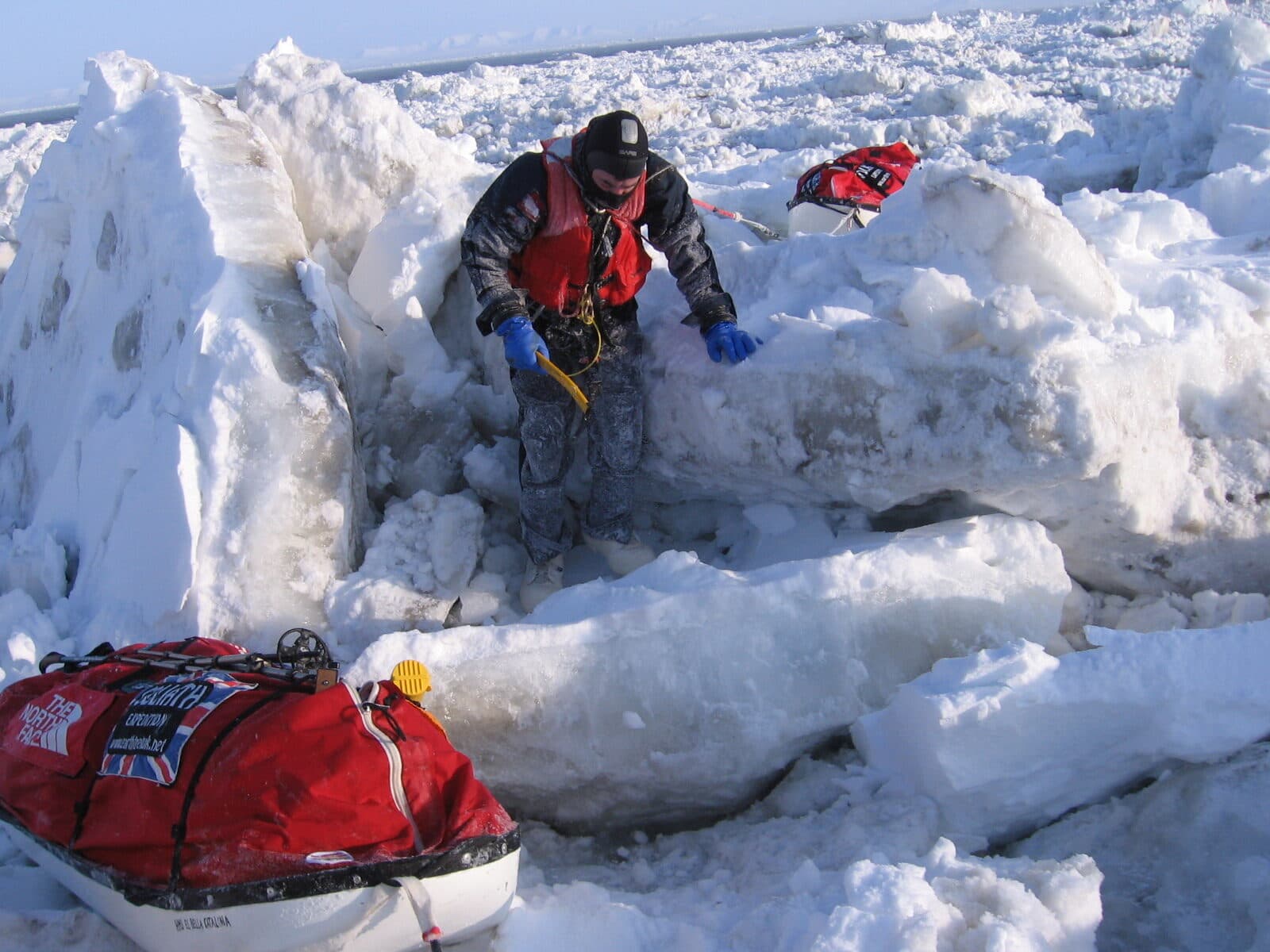
    Karl Bushby in a survival suit among broken pack ice on the Bering Strait crossing, his sled beside him.
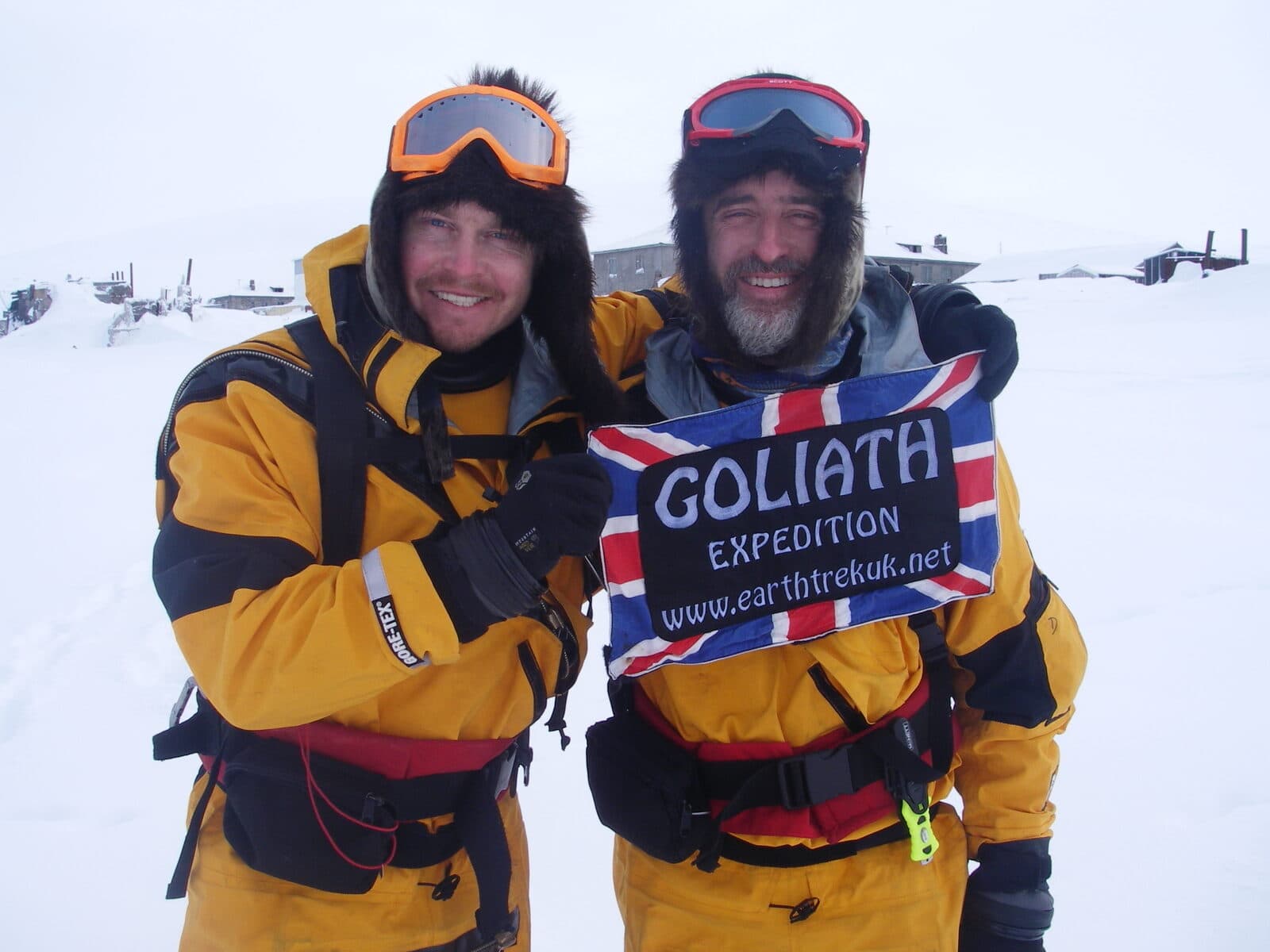
    Karl Bushby and his crossing partner in fur hats and survival suits, holding the Goliath Expedition flag after reaching Uelen, Russia.
  5. Siberia, Russia

    The Russian Expanse

    Russia gave the walk its longest, slowest years. Even reaching the trail meant a paper-war for the permits into a guarded military zone. Karl could only advance in the depth of winter, when the Siberian rivers and tundra froze hard enough to carry him, and only inside ninety-day visa windows — walk, leave, come back, walk again — with Russian law capping him at ninety days in every hundred and eighty.

    Read more…Show less

    He forged from Uelen deep into the interior toward Bilibino and beyond, yet whole seasons moved the line forward by only a few weeks; miss the freeze and the country became an impassable matrix of roaring rivers and deep swamp, impossible on foot.

    Then a different kind of storm hit. The 2007–2008 financial crisis wiped out his core sponsors, and with no money for permits or logistics the expedition simply stopped. Karl retreated to Mexico from 2008 to 2010, surviving on almost nothing while the walk hung in the balance. Finding backers mid-recession felt nearly as hard as the ice itself, but by 2010 sheer persistence won him a fresh wave of sponsorship, and in the spring of 2011 he stepped back onto the Siberian trail.

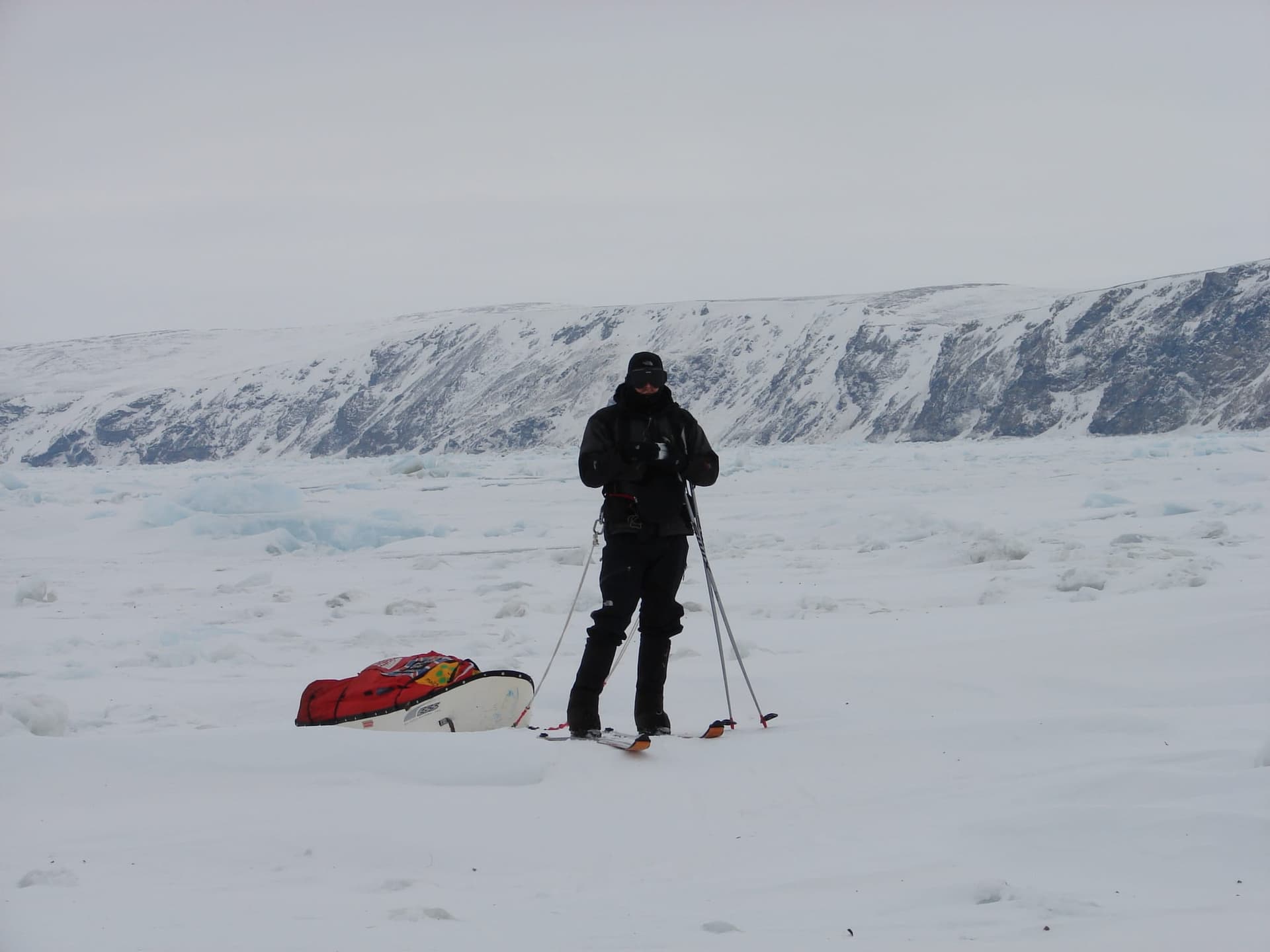
    Karl Bushby on skis hauling a red sled across the frozen Russian Arctic, snow-covered cliffs behind him.
  6. United States

    5,600km in the Wrong Direction

    In April 2012 Russia denied the next visa outright, and the whole expedition stopped dead against a paper wall. Facing immovable bureaucracy, Karl did the only thing he knew how to do — he started walking. In the wrong direction. Leaving his sponsors' base in Los Angeles, he set off across the United States, sea to shining sea, a 5,600-kilometre trek to Washington, D.C., aimed squarely at the front doors of the Russian Embassy.

    Read more…Show less

    It was a year-long walk of pure protest, a rolling media campaign built to prove his determination and somehow move a political needle that would not otherwise shift. The audacious gamble paid off. By the time he reached the capital his relentlessness had captured global attention; the Russian government blinked, the ban was overturned, and he was handed a formal letter of invitation. In 2014 he finally walked out of the embassy with a brand-new visa in hand — the triumphant end of a detour of thousands of kilometres in entirely the wrong direction.

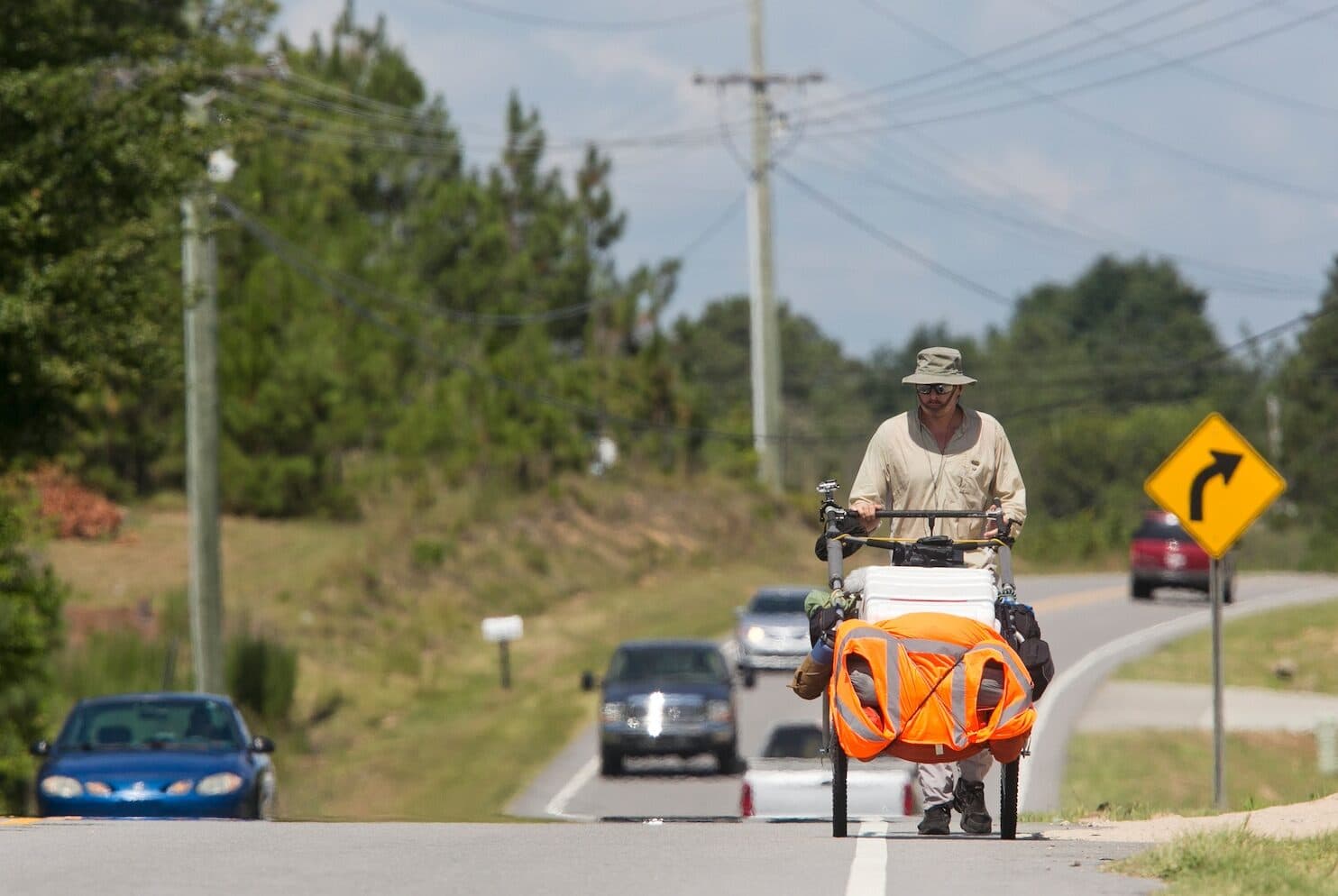
    Karl Bushby pushing his cart along a roadside in the United States, traffic passing on a summer highway.
  7. Mongolia

    The Mongolian Steppes

    Back across Russia and into Mongolia, arriving in Ulaanbaatar in the summer of 2017, the walk took its most ambitious turn. Collaborating with a group of fellow explorers, Karl hatched an epic plan: to forge a path across Central Asia along the historic Silk Road with a caravan of ten Bactrian camels. They assembled a diverse international squad from the UK, the US, Turkey and Mongolia, and built a training camp west of the capital, spending five grueling months breaking and preparing the young camels for the haul ahead.

    Read more…Show less

    Just before the bitter winter of 2017 set in, the caravan officially set out and covered more than a thousand kilometres across the unforgiving steppe. But the strain told on the group as much as the animals: internal disagreements and rising tensions fractured the team, and the camel journey was abruptly dissolved. Karl left the caravan behind and crossed into China alone — the way he had always done the walking.

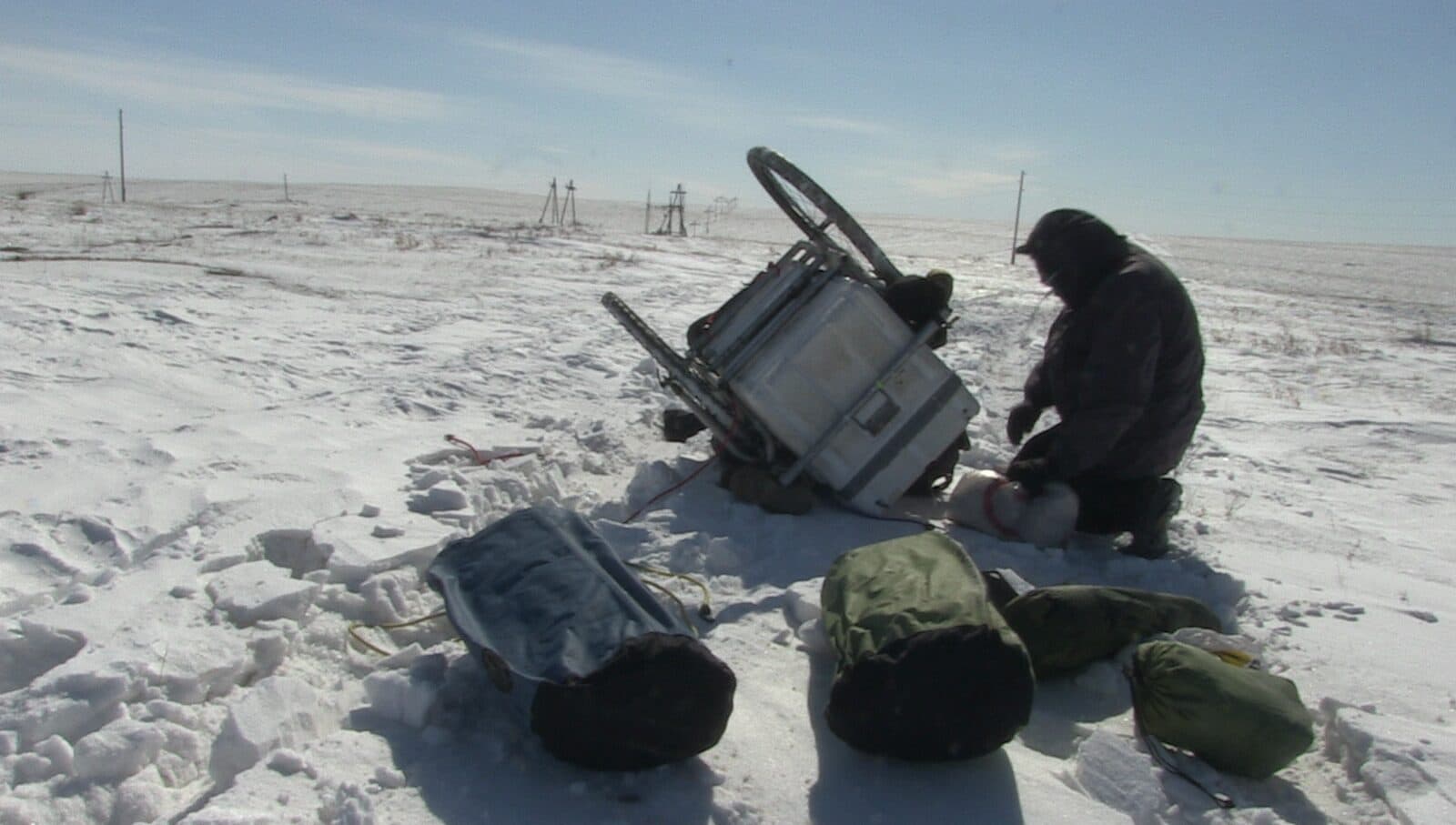
    Karl Bushby kneeling beside his cart on the frozen, wind-scoured Mongolian steppe under a pale winter sky.
  8. China

    China

    China was the second of the two great political tests, and the most heavily surveilled ground of the whole route. Through Xinjiang the security hardened in concentric rings radiating out from Urumqi: first an endless canopy of cameras, every hundred metres along the highways, then biometric checkpoints every few kilometres that could delay him two hours at a time, then unmarked cars tailing him for days.

    Read more…Show less

    Eventually a lone officer fell in beside him without a word and walked him to a roadside tyre-repair shack, where plainclothes police arrived in three tactical groups, stripped and searched his gear, and confiscated all his footage. He was removed from the road and confined to a hotel under armed guard, then told flatly that the walk was over — they would drive him to the Kazakh border, which would have broken the continuous-walking rule and ended everything.

    Handed his phone back for a moment, he fired off an emergency text to his team in Los Angeles and hit send just as they took it from his hands. The British Embassy intervened. They let him keep walking, but under a strictly mandated route, a twenty-four-hour escort, no camping and, later, no internet — right up to the Kazakh border.

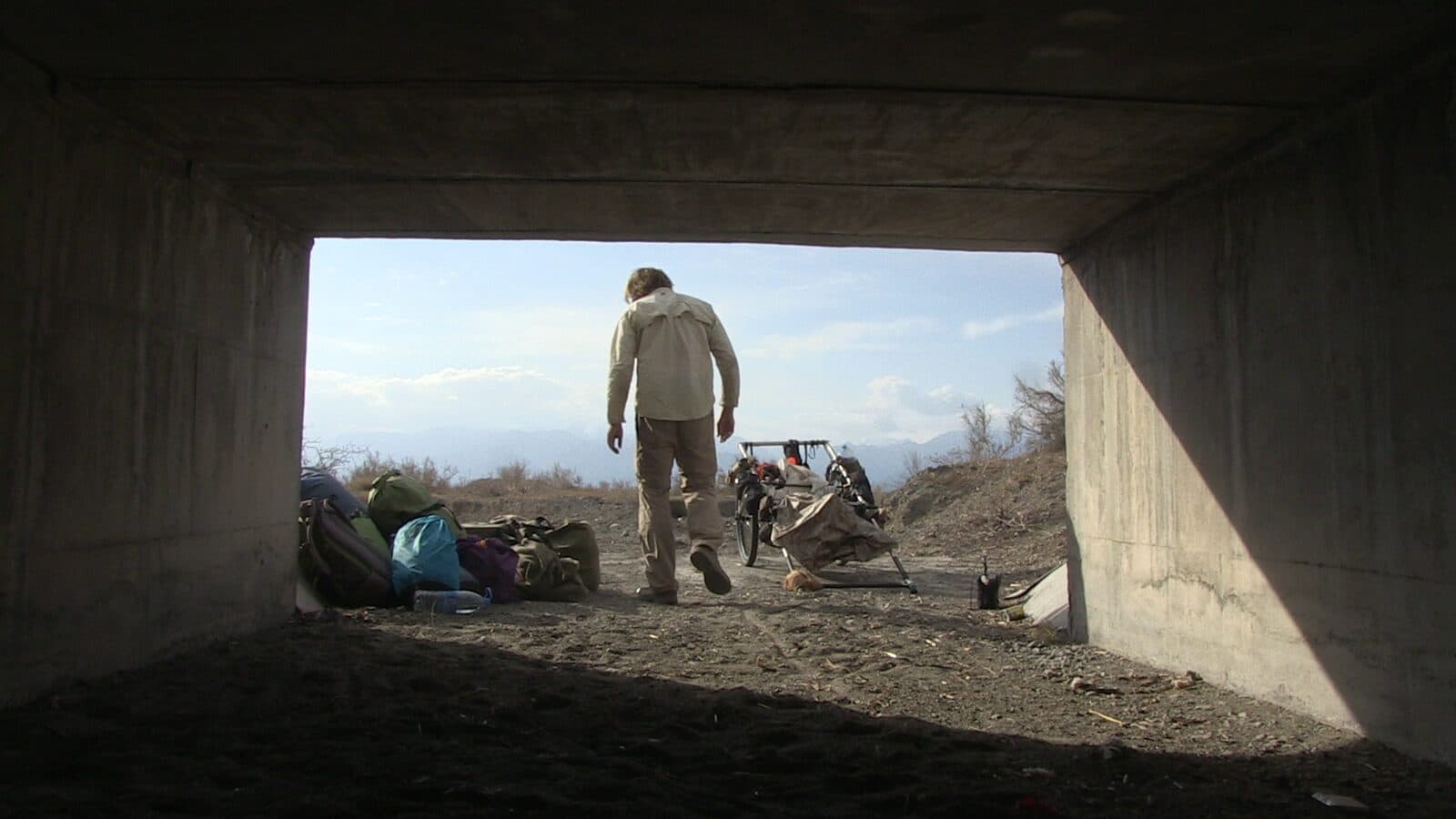
    Karl Bushby walking out of a concrete underpass toward distant mountains in China, his cart and kit beside him.
  9. Kazakhstan to Azerbaijan

    The Caspian Sea

    Past China the land route ran into a wall of geopolitics. Iran became one of the hardest riddles of the whole walk — US sanctions legally barred his American sponsors from funding the crossing, and then the assassination of General Qasem Soleimani slammed every channel shut overnight. Karl dug in for the long game and waited for the situation to cool.

    Read more…Show less

    Just as Iran reopened to him in the spring of 2020, the world stopped: the pandemic became one of the first crises to upend the region, and borders slammed shut across the globe. Turkmenistan never reopened; the northern reroute through Russia died with the invasion of Ukraine; Iran stayed impossible.

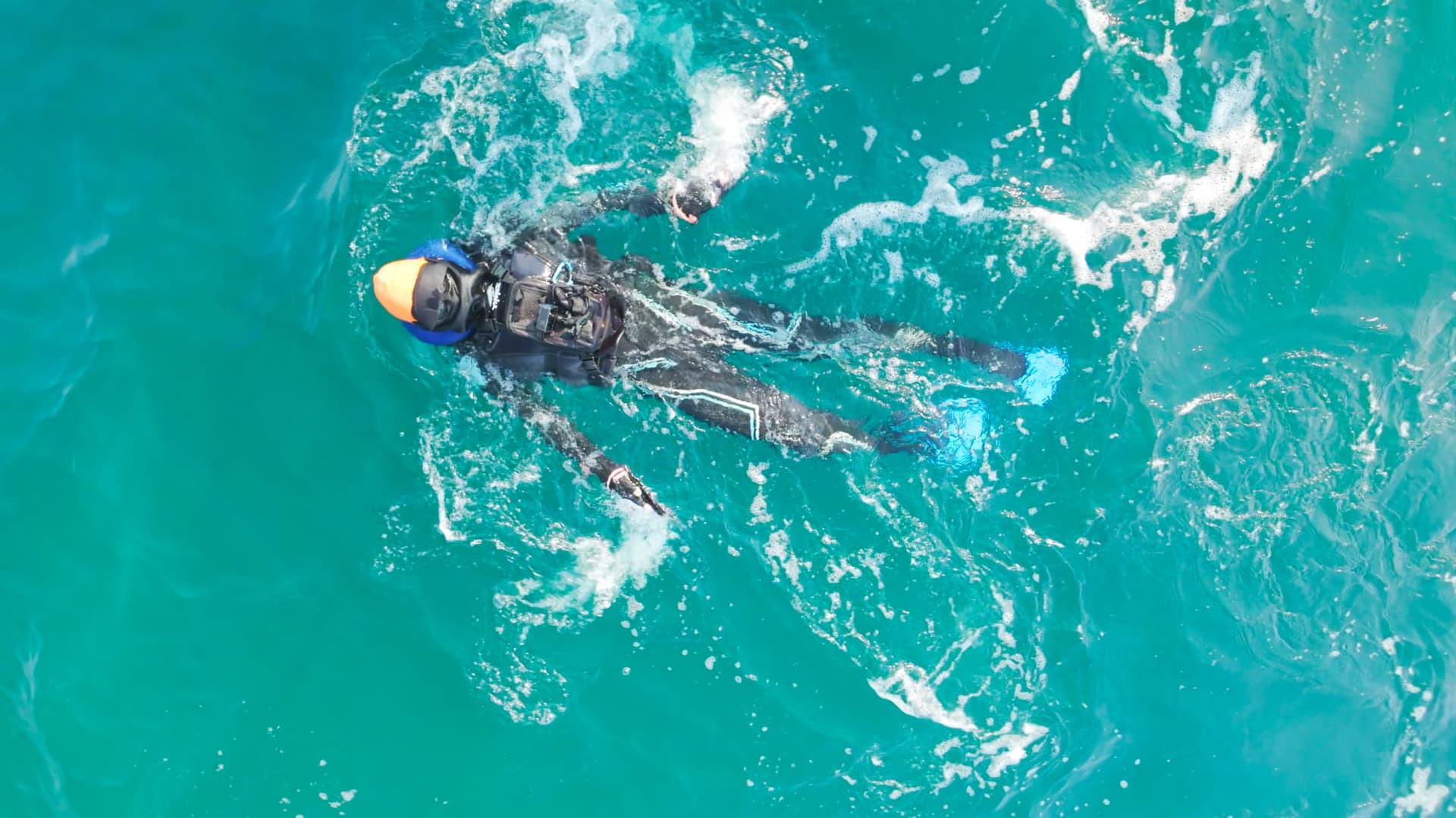
    With every land route sealed, the only way forward was Plan C — an unprecedented straight-line swim across the open water. In late summer 2024, joined by fellow explorer Angela Maxwell, Azerbaijani national swim champions and a maritime support team flanked by escort vessels, he crossed 288 kilometres of the Caspian Sea from Kazakhstan to Azerbaijan, battling waves, nausea and currents in six-to-nine-hour shifts. After thirty-one days at sea and over 132 hours in the water, the team stepped ashore in Azerbaijan to a hero's welcome, backed by the Azerbaijani government.

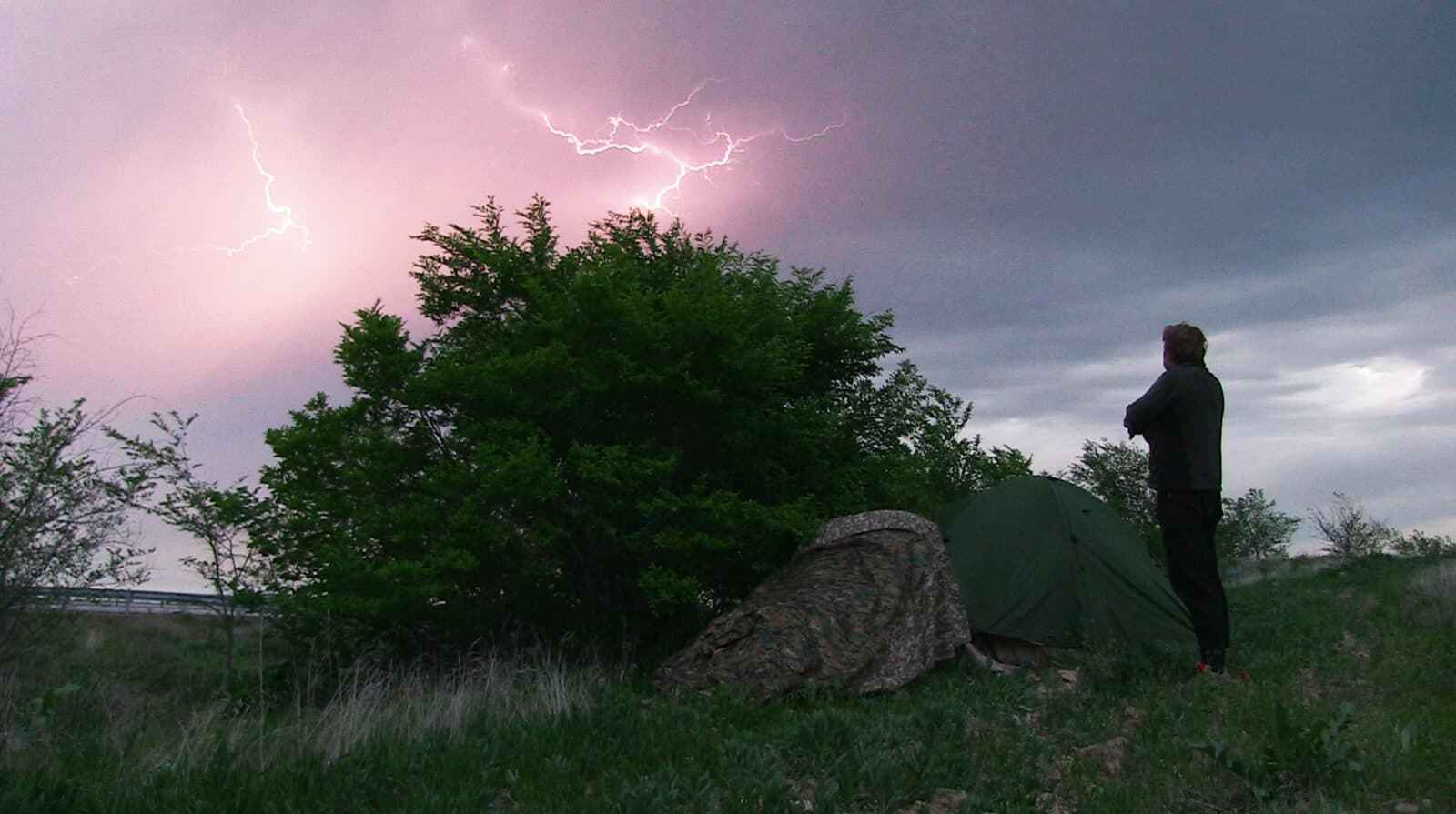
    Karl Bushby beside his tent on the Kazakh steppe, watching forked lightning split a darkening pink sky.
    Aerial view of Karl Bushby swimming the Caspian Sea in a wetsuit, alone in turquoise open water.
  10. Azerbaijan to the Channel

    The Gateway to Europe

    On 10 November 2024, fresh off the Caspian swim, Karl walked out of Baku and set his sights on the Bosphorus. Five months and more than two thousand kilometres later — across Azerbaijan, Georgia and the rugged expanse of Turkey — he reached the historic streets of Istanbul on 25 April 2025. The city was far more than another checkpoint; it was the physical and symbolic gateway to Europe.

    Read more…Show less

    A week after arriving he secured rare, highly coveted permission to do what is normally strictly forbidden: cross the 15 July Martyrs Bridge, the old Bosphorus Bridge, entirely on foot. Walking high above the shipping lanes, he stepped off the bridge onto the European side of Istanbul — on his home continent for the first time in decades.

    A little over three thousand kilometres now stand between him and the UK, and the final countdown has begun. At his relentless five-month pace he is roughly ten to twelve months from the finish, working around the strict limits of European Schengen visas as he pushes toward home — and one last stretch of water, the English Channel, still unresolved, still between him and his mother's door.

    Karl Bushby in swim kit during Caspian training off Baku, Azerbaijan.
03

Ten Thousand Days

Ten thousand sunrises and sunsets, witnessed from every landscape imaginable: moonrises over oceans, mountains, and deserts. I carried the dreams of ten million people with me, on the unforgettable life that is the road.

  1. 10,000+days away from home
  2. 25countries on the route
  3. 1 ½laps of the Earth, nearly
  4. 2rules, unbroken
  5. 75,000,000steps · by estimate
To the Strangers

If nothing else, this journey has shone a bright light on the nature of humanity. From the first days to now, every culture, every nation, every people has shown the very best of us.

I have not done this alone — the whole world has been my support network. From the impoverished to the wealthy, from family and friends to nation states, each has played a part in keeping me upright and moving forward: nursing me back to health when I was sick, feeding and watering me on my worst days.

Despite the horror of the 24-hour news cycle, the reality is we are worth the fight.

Whatever challenges we face, whatever your estimate of the odds, my money is on us, every time.

“We” is what gets me across the finish line

A closing window

The journey approaches the end: home, after nearly three decades in motion. Book the months around the finish and your room watches the story close in real time. That window does not repeat.

04

The Work

Keynotes for serious rooms. Partners for the final stretch. A straight answer for press and rights.

05

Check a Date

Name, email, and a line about the event are enough to start — the rest is optional.

Inquiry

Prefer email? graham@karlbushby.world

Bring Karl to your stage

The walk ends this autumn, and the months around the finish book once. Tell us the room, the city, and the timing, and you will get a straight answer on fit, dates, and fee. The inquiry takes two minutes.